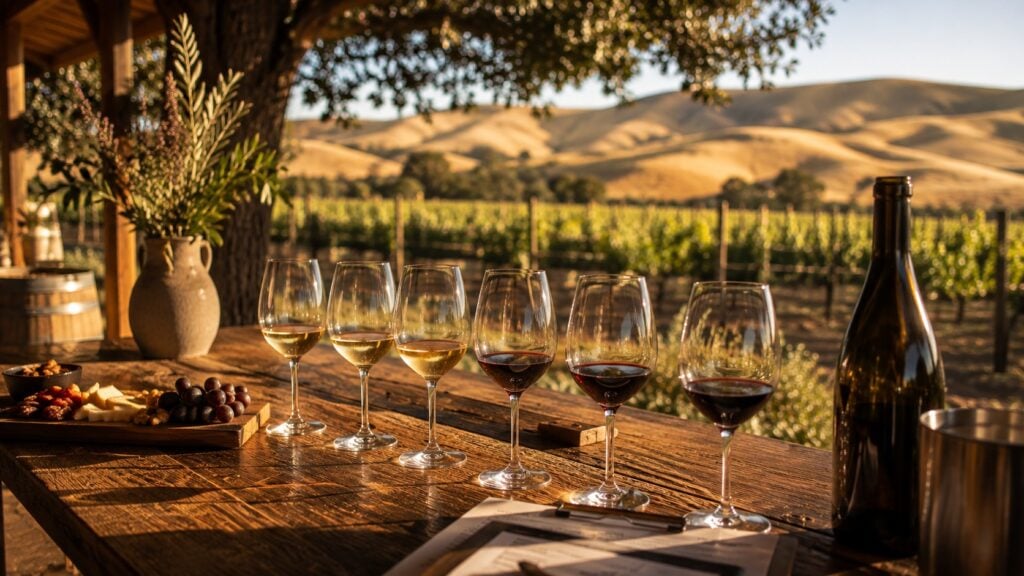
When you bring a glass of wine to your nose and inhale that first swirl of scent, you’re not just enjoying fragrance, you’re tapping into years of biology, chemistry, geology and art. Aroma in wine is much more than ‘the smell’: it’s the invisible trail of volatile compounds that rise from the wine into your nose, triggering memory, emotion, and expectation.
For wineries like Mitchell Katz, the signature “nose” of each bottle is the hallmark of quality and place. Understanding how that aroma develops, from vineyard through barrel to bottle, gives us a richer appreciation of what we taste (and what we smell).
Primary vs. Secondary vs. Tertiary aromas — a roadmap
To make sense of wine aromas it helps to categorize them into three stages:
Primary aromas (varietal)
These are the scents you inherit from the grape variety itself (its genetic makeup) and the terroir: think floral, fruit, herb‑leaf, citrus, stone‑fruit. These compounds are largely built in the vineyard, bound in grape skins or juice.
Secondary aromas (fermentation)
Once yeast begins its work in the winery, new aromas emerge: esters (fruity, floral), higher alcohols, volatile acids, compounds created through yeast metabolism.
Tertiary aromas (aging/maturation)
As wine ages, whether in barrel, bottle, or tank, more subtle aromas evolve: oak‐derived vanillin or lactones, norisoprenoids, oxidative notes like honey, dried fruit, leather.
By breaking it down this way, we can trace how Mitchell Katz’s wines develop their unique scent profiles step‑by‑step.
The grape’s gift: How the vineyard sets the aroma stage
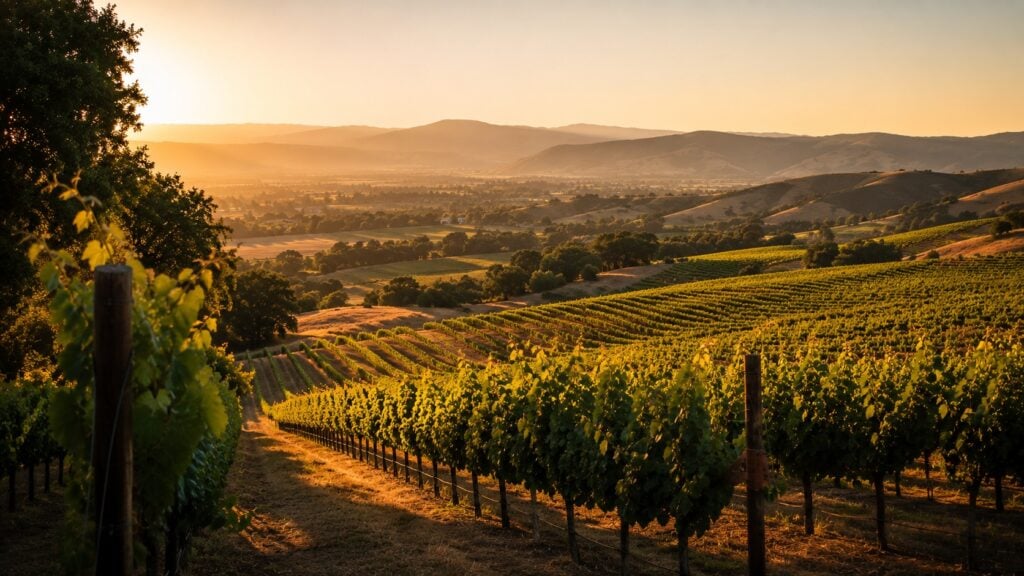
The aroma story begins long before harvest. At Mitchell Katz Winery in the Livermore Valley, the vineyard environment plays an essential role.
Terroir & varietal
- The varietal itself dictates the potential aromatics: for example, monoterpenes create floral notes in Gewürztraminer/Riesling; methoxypyrazines yield green‑pepper/grassy notes in Cabernet family.
- Soil, microclimate, vine stress, sunlight exposure all shape how grapes accumulate aroma precursors.
- In Livermore Valley, the warm days + cooling nights allow grapes to ripen fully while preserving aromatic nuance, an advantage Mitchell Katz leans into.
Vineyard practices
- Meticulous canopy management ensures grapes receive balanced sunlight and airflow, which influences aroma precursor formation and oxidation risk.
- Picking decisions: harvesting at the optimal aromatic “sweet spot” rather than just sugar numbers ensures those subtle varietal aromas are captured.
By the time the grapes arrive at the winery, they already carry the blueprint of aromatic potential but the real magic comes next.
Fermentation & yeast‑magic: Building aroma complexity
Once grapes are in the winery, the transformation begins. Here’s how Mitchell Katz turns aromatic potential into sensory reality.
Yeast selection & fermentation conditions
- Specific yeast strains are chosen not only for alcohol conversion but for how they release or transform aroma precursors into volatile compounds (esters, thiols, norisoprenoids). Research shows hundreds of possible compounds are involved in wine aroma.
- Temperature, oxygen exposure, nutrient levels—all influence which compounds predominate. For example, warmer fermentation may favour more esters (fruity) but risk losing delicate floral nuances.
Key aroma families and what they smell like
- Esters: fruity scents like banana, pear, apple. These form from alcohol + acid during fermentation.
- Higher alcohols & volatile acids: add complexity, sometimes spicy or nutty.
- Thiols & sulfur compounds: when managed properly, can contribute tropical fruit aromas (in small doses); but mis‐managed they cause faults.
- Methoxypyrazines: green pepper, asparagus, herbaceous notes (especially in certain grapes) — low odor thresholds, so even small amounts matter.
At Mitchell Katz, this means rigorous monitoring: fermentations are watched for temperature swings, nutrient needs, and oxygen touches to guard aroma integrity.
Oak, time and aging: The finale of aroma development
After fermentation, the work isn’t done. Aging, whether in barrels, tanks, or bottles, refines the aroma profile further.
Oak influence & barrel regimen
- New oak or heavily toasted barrels impart vanillin (vanilla), lactones (coconut), spice and toast characters.
- Time in barrel allows extraction of these compounds and slow oxidation which softens primary aromas and brings out tertiary ones.
- Mitchell Katz uses carefully selected cooperage (barrels) and timing to frame the aroma: enough oak to add character, but never so much that it overwhelms the fruit core.
Bottle aging and evolution
- Over months or years in bottle, aroma shifts: fruit becomes dried or stewed, floral becomes honeyed or nutty.
- Norisoprenoids, derived from carotenoid degradation in the grape or wood, evolve slowly and contribute to spice, tobacco, and leather aromas.
This thoughtful aging process ensures that when you open a Mitchell Katz wine, you’re greeted with a rich, layered aroma—not just a flat “grape juice” smell.
What makes Livermore Valley unique (and how Mitchell Katz leverages it)
Location matters. The Livermore Valley AVA has particular attributes that Mitchell Katz harnesses to boost aroma.
- Warm daytime temperatures allow full ripening of grapes; cool evenings preserve aromatic compounds and acidity.
- Diverse soils (sand, gravel, clay) contribute subtle mineral and earth‐linked aroma nuances that grow into the final wine.
- Proximity to the coast offers lingering breezes, slowing ripening slightly and preserving freshness.
Using these environmental advantages, Mitchell Katz tailors vine management and harvest timing to capture maximum aromatic complexity: fruit intensity from the sun, structure from the cooling nights, terroir expression from the soil.
Tasting like a pro: Detecting and describing aroma notes at Mitchell Katz
When you’re sipping a Mitchell Katz wine, here’s how to tune your nose and fully enjoy the aroma layer.
Step 1: Look and swirl
Observe the wine’s color (which hints at its aging regime) then swirl to release volatiles.
Step 2: Smell in layers
- First sniff: what’s the immediate scent? E.g., bright berries, citrus zest, lavender. That’s likely primary aroma.
- Second sniff: what more subtle scents emerge? Spice, oak, herbal notes? That’s secondary or tertiary.
- Third sniff: look for evolution — is it changing? Maybe vanilla, tar, earth, leather.
Step 3: Use guided descriptors
Here are examples of what you might detect in Mitchell Katz’s wines:
- Fruit/Floral: cherry, raspberry, violet, rose petals — often in younger wines.
- Spice/Oak: vanilla, cinnamon, mocha, cedar — from barrel influence.
- Terroir/Earth: graphite, dusty clay, wet stone, iodine — from vineyard soil+site.
- Mature Notes: tobacco leaf, leather, forest floor, mushroom — in older bottles.
Keep a tasting journal and note how aromas evolve over time, you’ll grow a personal aroma vocabulary.
Common aroma pitfalls & how Mitchell Katz avoids them
Even the best wines can suffer when aroma control isn’t prioritized. Here’s how Mitchell Katz navigates risks:
Loss of primary aromas
If grapes are over‐ripe or harvested too late, varietal aromas may degrade. Mitchell Katz harvests at optimal aromatic development, not just sugar.
Fermentation faults
Excessive sulfur compounds, overly reductive conditions, or improper yeast nutrition can create off aromas (e.g., rotten egg, burnt rubber). Contemporary research finds microbial origin of many aroma compounds. Mitchell Katz uses controlled fermentations, modern monitoring, and selected yeast/oxygen protocols.
Over‑oaking or aging mis‑management
Too much new oak or too long barrel aging can mask varietal aromas under heavy spice and wood notes. Mitchell Katz balances barrel regime to preserve fruit and site expression.
Bottle storage issues
Poor storage (heat, light, vibration) can degrade aroma precursors and produce off notes. Mitchell Katz clients are advised on proper storage to keep aroma integrity intact.
Why aroma matters for wine enjoyment and quality
A wine’s aroma is your first emotional connection. It signals the wine’s personality, draws you in, and sets expectations for the palate.
- Aroma complexity often correlates with wine quality: more nuanced aromas often mean more intentional viticulture & winemaking.
- Aroma helps pairing: the scents guide you to foods that will harmonize. A vanilla note might pair nicely with grilled meats; a citrus zest aroma with seafood.
- Aroma memorability: we remember scents longer than tastes. A signature “nose” ties back to your experience and keeps you returning.
For Mitchell Katz, crafting wines with a distinctive, well‐balanced aroma is a core part of their brand and guest experience.
Conclusion: From vine to glass — the aroma journey
In the end, when you swirl and inhale a glass of Mitchell Katz wine, you’re experiencing years of layering:
- The vine in Livermore valley capturing sun, soil, breeze.
- Grapes harvested at the perfect aromatic moment.
- Yeast converting sugars and acids into aromatic compounds.
- Oak, barrel, bottle refining and evolving those aromas.
- Your own senses interpreting it, labeling it as cherry, spice, leather, forest floor, or something uniquely memorable.
Understanding the science of aromas doesn’t take away the magic, it enhances it. It lets you appreciate the craft behind every sniff, and gives you deeper connection to the glass in your hand.
Here’s to discovering the signature nose of Mitchell Katz Winery, and to enjoying wines that invite you to smell, savor, and remember.