Imagine listening to a solo musician perform a beautiful melody. Every note stands out, allowing you to appreciate the distinctive sound of one instrument.
Now imagine an orchestra performing the same piece. Different instruments contribute their own tones, textures, and rhythms, creating an entirely different experience.
That comparison offers a helpful introduction to the difference between single-varietal and blended wines.
A wine blend is a wine created by combining two or more grape varieties or separate wine lots to achieve a particular flavor, structure, or style. In everyday wine terminology, the phrase usually refers to a wine made from multiple grape varieties.
For example, a winemaker might combine Cabernet Sauvignon with Merlot and Cabernet Franc. Each grape contributes different characteristics, creating a finished wine that expresses their combined qualities.
However, wine blending is more nuanced than simply mixing different grapes.
Winemakers may also combine separate barrels, vineyard blocks, or fermentation lots of the same grape variety. These decisions can help refine the finished wine without changing its primary varietal identity.
Blending has been part of winemaking for centuries. Many celebrated wine regions have developed traditions around combining complementary grape varieties, while others emphasize individual grapes and their distinctive characteristics.
Neither approach automatically produces a superior wine.
The quality of the finished bottle depends on factors such as grape quality, vineyard conditions, harvesting decisions, fermentation, aging, and the skill of the winemaker.
Understanding what a wine blend is allows wine enthusiasts to appreciate these decisions rather than assuming every bottle follows the same production process.
What Is a Single-Varietal Wine?
A single-varietal wine is made entirely or predominantly from one grape variety.
Common examples include Cabernet Sauvignon, Merlot, Chardonnay, Sauvignon Blanc, and Pinot Noir.
When someone describes a wine as a Cabernet Sauvignon, they are identifying the grape variety responsible for its primary character.
A single-varietal Cabernet Sauvignon might display blackcurrant aromas, noticeable tannins, and a structured finish.
A single-varietal Merlot may offer plum flavors, a rounder texture, and softer tannins, depending on where the grapes grow and how the wine is made.
The appeal of single-varietal wine often lies in its ability to showcase the recognizable characteristics of an individual grape.
However, there is an important labeling detail that surprises many wine enthusiasts.
In the United States, a wine generally needs to contain at least 75% of the named grape variety to qualify for a varietal designation under federal labeling rules, although certain regions and designations have additional requirements.
That means a bottle labeled Cabernet Sauvignon may legally contain a smaller proportion of other grape varieties.
Consequently, a varietally labeled wine is not necessarily made from 100% of one grape.
This distinction is important because it demonstrates that blending and varietal labeling are not always mutually exclusive.
A wine can express the recognizable character of Cabernet Sauvignon while incorporating other grapes to adjust its balance or complexity.
For consumers, the varietal name provides a useful starting point for understanding the wine, but it does not always reveal its complete composition.
Blended Wine vs. Single-Varietal Wine: Key Differences
The most obvious difference between blended wine and single-varietal wine is the number of grape varieties involved.
However, their differences extend into flavor development, production decisions, and how winemakers communicate the identity of a finished wine.
Grape composition
A single-varietal wine focuses primarily on one grape variety.
A varietal blend intentionally combines multiple varieties, often allowing each to contribute a recognizable characteristic.
For example, a Cabernet Sauvignon and Merlot blend might combine the structure associated with Cabernet Sauvignon and the rounder texture frequently associated with Merlot.
The exact result depends on the grapes, proportions, and winemaking methods.
Flavor expression
Single-varietal wines often provide an opportunity to examine the distinctive qualities of a particular grape.
A varietal Malbec, for instance, might emphasize dark fruit, floral aromas, and a particular tannin profile.
A blend containing Malbec may incorporate those characteristics alongside complementary flavors from other varieties.
This does not mean blended wines are always more complex or single-varietal wines are always simpler.
Exceptional wines exist in both categories.
Winemaking flexibility
Blending offers winemakers an additional way to adjust a finished wine.
If one component has pronounced tannins, another may contribute a softer mouthfeel.
If a wine needs greater freshness, a component with higher acidity may help improve its balance.
Single-varietal wines can also be refined through decisions involving harvest timing, fermentation, barrel selection, and aging.
The distinction concerns the available blending components rather than the overall skill required.
Wine identity
A single-varietal wine is often presented through the identity of its grape.
A varietal blend may instead emphasize a regional tradition, proprietary name, or particular house style.
Both approaches can communicate something meaningful about the winemaker’s intentions.
Why Do Winemakers Blend Different Grapes?
Wine blending is one of the most fascinating creative decisions in winemaking.
Different grape varieties have different natural strengths, and combining them allows winemakers to explore how those characteristics interact.
Think of a chef preparing a carefully balanced sauce.
One ingredient provides richness, another brings brightness, and a third adds depth.
The goal is not necessarily to make each ingredient disappear. Instead, the chef wants them to work together.
Wine blending follows a similar principle.
Creating balance
Balance is one of the primary reasons winemakers blend wines.
A powerful red wine might contain abundant tannins but relatively restrained fruit characteristics.
Adding a complementary component may help the finished wine feel more harmonious.
Similarly, a wine with generous fruit concentration may benefit from a component that contributes acidity or structure.
The resulting blend should feel cohesive rather than like several disconnected flavors competing for attention.
Developing complexity
Different grapes contribute different aromatic compounds and flavor characteristics.
Cabernet Sauvignon may bring blackcurrant and cedar-like notes.
Merlot may contribute plum and softer fruit characteristics.
Cabernet Franc can introduce floral, herbal, or red-fruit aromas.
Combining these elements may create a wine that reveals different qualities as it opens in the glass.
However, complexity is not simply a matter of adding more grape varieties.
A thoughtfully crafted two-grape blend may be more expressive than a poorly balanced wine containing five varieties.
Adjusting texture
Texture influences how wine feels in the mouth.
Some red wines create a firm, drying sensation because of their tannin structure.
Others feel rounder or silkier.
Blending can help a winemaker shape these sensations.
For example, a small proportion of a softer wine may change how a more tannic component feels.
These adjustments can be subtle, but they contribute to the overall drinking experience.
Responding to vintage variation
Every growing season is different.
Temperature, rainfall, sunlight, and harvest conditions influence grape development.
A grape variety that performs exceptionally well in one year may produce a different flavor profile the following season.
Blending gives winemakers flexibility when working with these natural variations.
By adjusting proportions, they can pursue a desired style while respecting the characteristics of the vintage.
That does not mean blending eliminates vintage differences.
Instead, it provides another tool for responding to them.
Expressing creativity
Some winemakers use blending to explore combinations that fall outside traditional regional formulas.
They may experiment with unusual grape pairings or adjust familiar blends to emphasize different characteristics.
This creative freedom helps explain why blended wines remain an important part of modern winemaking.
How Is Blended Wine Made?
The wine blending process can vary considerably depending on the winery, grape varieties, and desired style.
Nevertheless, many blends follow a recognizable sequence.
Step 1: Harvesting the grapes
The process begins in the vineyard.
Different grape varieties often ripen at different times.
A winemaker may harvest Merlot before Cabernet Sauvignon, for example, depending on the vineyard and growing season.
Each grape is evaluated according to its ripeness, acidity, flavor development, and intended role in the finished wine.
These decisions influence the blending possibilities available later.
Step 2: Fermenting individual components
Many modern winemakers ferment grape varieties separately.
This approach preserves flexibility because each component develops its own characteristics before blending.
Separate fermentation also allows the winemaker to tailor fermentation decisions to the needs of each grape.
However, not every blended wine is made this way.
Some producers ferment multiple grape varieties together, a practice commonly called co-fermentation.
Traditional field blends may involve harvesting different varieties from the same vineyard and fermenting them together.
Step 3: Evaluating the wine
Once fermentation has progressed or finished, winemakers evaluate the resulting wines.
They examine aroma, acidity, tannins, body, flavor intensity, and finish.
A particular barrel might offer excellent fruit concentration but require additional structure.
Another might contribute distinctive aromatics.
These evaluations help determine which components may work well together.
Step 4: Creating trial blends
Before producing a final blend, winemakers may prepare small experimental combinations.
For example, one trial might contain 70% Cabernet Sauvignon and 30% Merlot.
Another might use 60% Cabernet Sauvignon, 30% Merlot, and 10% Cabernet Franc.
Even modest adjustments can noticeably change the finished wine.
The winemaker compares these trials to determine which proportions create the desired result.
Step 5: Aging and refinement
Depending on the wine, blending may occur before, during, or after aging.
Some wines spend time in oak barrels before the final proportions are established.
Others are assembled earlier and allowed to develop together.
The timing can influence how the components integrate.
Step 6: Bottling
Once the winemaker is satisfied with the composition and the wine has completed its required preparation, the blend is bottled.
The finished wine represents a series of deliberate decisions rather than a simple mixture of available grapes.
Single-Vineyard vs. Single-Varietal: An Important Distinction
Wine terminology can become confusing because several familiar expressions sound similar.
Two particularly important terms are single-vineyard and single-varietal.
Although they sometimes appear together, they describe different aspects of a wine.
A single-vineyard wine identifies the geographic source of the grapes.
A single-varietal wine identifies the grape variety used to produce the wine.
A wine can be both single-vineyard and single-varietal.
For example, a Cabernet Sauvignon produced from grapes grown in one designated vineyard may satisfy both descriptions.
However, a wine can also be a single-vineyard blend.
Imagine a vineyard planted with Cabernet Sauvignon, Merlot, and Cabernet Franc.
If a winemaker combines those grapes into one wine, the finished bottle may qualify as a single-vineyard wine even though it contains multiple grape varieties.
Conversely, a varietally labeled Cabernet Sauvignon may contain grapes sourced from several different vineyards.
These distinctions help explain why vineyard designation and grape composition should be considered separately.
Why vineyard identity matters
Vineyard location influences the conditions under which grapes develop.
Soil composition, sunlight exposure, elevation, temperature, and water availability can affect ripening and flavor development.
When grapes come from one vineyard, the finished wine may offer a more focused opportunity to examine the characteristics associated with that site.
This is particularly interesting when comparing different grape varieties grown within the same vineyard.
The shared growing environment provides a useful point of reference, while each grape expresses that environment differently.
Why grape identity matters
Grape variety influences a wine’s natural flavor tendencies, acidity, tannin structure, and aromatic profile.
Understanding the distinction between vineyard identity and grape identity helps wine enthusiasts interpret both elements without confusing them.
It also provides a useful foundation for understanding the winemaking philosophy of producers that emphasize vineyard-specific bottlings.
How to Taste and Compare Blended Wines
You do not need professional training to recognize meaningful differences between blended and single-varietal wines.
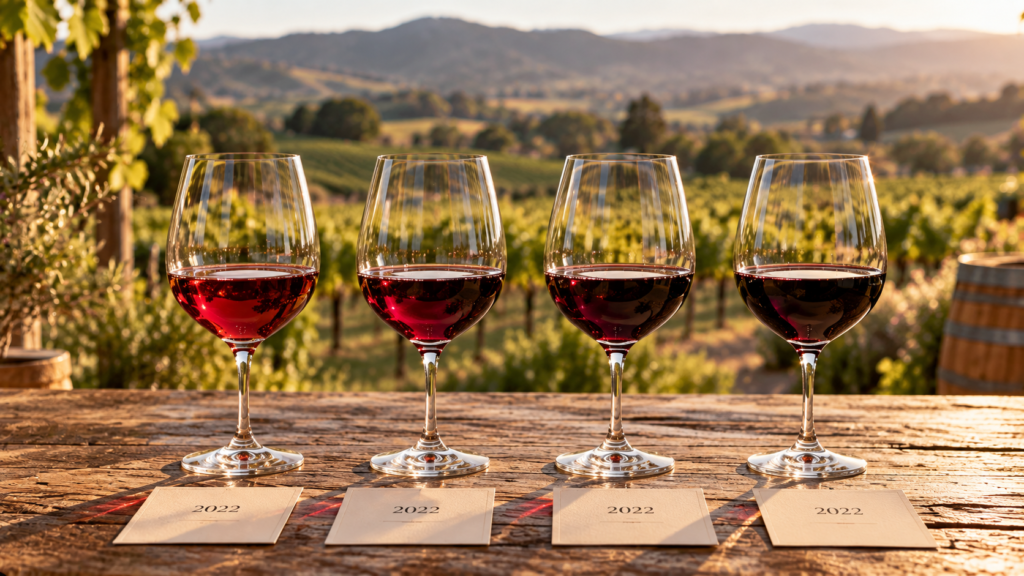
A simple, structured tasting can make the experience more informative.
Start with comparable wines
Choose wines that share several characteristics.
For example, you might compare a varietally labeled Cabernet Sauvignon with a Cabernet Sauvignon-based blend from the same general region.
This helps reduce some of the differences caused by unrelated grape styles.
Whenever possible, choose wines from similar vintages and serve them at comparable temperatures.
The goal is not to determine which wine is universally better.
Instead, focus on identifying how their characteristics differ.
Examine the appearance
Begin by observing each wine in the glass.
Notice its color, depth, and clarity.
Some grape varieties contribute more intense pigmentation than others.
However, color alone cannot reliably reveal whether a wine is blended.
A deeply colored single-varietal Petite Sirah may appear darker than a blend containing several different grapes.
Appearance provides context rather than a definitive answer.
Compare the aromas
Swirl each glass gently and notice the aromas.
Does one wine emphasize blackcurrant or blackberry?
Does another display plum, floral notes, or spice?
A blend may reveal several aromatic characteristics, but a single-varietal wine can also offer a wide range of aromas.
Try describing what you actually smell rather than searching for a predetermined answer.
Your observations become more useful when they reflect your own experience.
Notice the texture
Take a small sip and pay attention to how the wine feels.
Does it create a firm, drying sensation?
Does it feel round and supple?
Is the acidity noticeable?
How does the wine’s weight compare with the other glass?
Texture can reveal important differences between grape varieties and blending choices.
A blend containing a substantial proportion of Cabernet Sauvignon may retain pronounced tannins, while another combination may feel noticeably softer.
Evaluate the finish
After swallowing or spitting the wine, notice how long its flavors remain.
Do the fruit characteristics continue?
Does the finish emphasize spice, acidity, or tannins?
Does the wine feel harmonious as its flavors fade?
The finish can help you understand how different components interact.
Revisit each glass
Wine can change as it spends time in the glass.
Aromas may become more noticeable, and your perception of texture may shift.
Returning to each wine after several minutes can reveal characteristics you initially overlooked.
This is especially useful when comparing wines with different tannin structures.
The experience demonstrates that wine tasting is not a single moment of judgment.
It is an evolving process of observation.
How to Read a Wine Label to Identify a Blend
Wine labels provide useful clues about grape composition, but they do not always reveal every detail.
Understanding common labeling conventions makes it easier to recognize the difference between blended and single-varietal wines.
Look for the grape variety
A label featuring a name such as Cabernet Sauvignon, Merlot, or Chardonnay usually indicates a varietally labeled wine.
However, as discussed earlier, U.S. labeling rules generally allow some additional grape varieties in these wines.
Therefore, the varietal name does not necessarily mean the bottle contains 100% of that grape.
Look for terms such as red blend
Some wineries identify their wines using straightforward descriptions such as Red Blend or White Blend.
These terms generally indicate that multiple grape varieties contribute to the finished wine.
However, they do not tell you the exact proportions.
Two bottles labeled Red Blend may have completely different compositions and flavor profiles.
Recognize proprietary wine names
Some producers use distinctive names rather than identifying the wine primarily by its grape varieties.
These names may represent a particular blend or wine style.
However, a proprietary name alone does not establish whether the wine contains one grape variety or several.
Consulting the producer’s technical notes or wine description can provide clarification.
Understand regional labeling
European wine labels often emphasize geographic origin rather than grape variety.
For example, a bottle labeled Bordeaux identifies a regional designation rather than a single grape.
Understanding the traditional grapes associated with that region can help you anticipate the wine’s general style.
However, regional traditions do not always reveal the exact composition of an individual bottle.
Read the back label and technical information
A winery’s detailed wine information may include grape percentages, vineyard sources, fermentation methods, and aging details.
These descriptions can help answer questions that the front label leaves unresolved.
For example, a wine described as 80% Cabernet Sauvignon and 20% Merlot is clearly a varietal blend, even if the front label prominently identifies Cabernet Sauvignon.
Learning to interpret this information makes wine labels considerably more useful.
Choosing Between a Blend and a Single-Varietal Wine
Understanding the difference between wine styles makes choosing a bottle less intimidating.
Rather than relying on assumptions about quality, consider what kind of experience interests you.
When exploring a particular grape
If you want to understand the characteristics of Cabernet Sauvignon, a varietally labeled Cabernet Sauvignon provides a useful starting point.
You can compare wines from different vineyards, vintages, and regions to discover how their expression changes.
The same approach works with Merlot, Malbec, Chardonnay, and other varieties.
This style of comparison can be particularly informative when the wines come from identifiable vineyards.
When exploring complementary flavors
If you are curious about how different grape varieties interact, a blend offers another kind of learning experience.
A Cabernet Sauvignon-based blend may retain the grape’s recognizable structure while incorporating characteristics from Merlot, Cabernet Franc, or other varieties.
The resulting wine may feel familiar in some respects and noticeably different in others.
When considering food
Both blended and single-varietal wines can complement a wide range of foods.
The most useful pairing considerations include acidity, tannins, body, sweetness, and flavor intensity.
A structured red wine may work well with a rich dish, whether that wine is blended or varietally labeled.
A lighter, more acidic wine may complement a different style of meal.
Grape composition can provide clues, but the actual characteristics of the finished wine matter more.
When discovering personal preferences
The simplest way to develop confidence is to compare wines without assuming what you should prefer.
You may enjoy the focused fruit character of a particular single-varietal wine.
You may prefer the combination of textures and aromas in a blend.
Your preferences may also change depending on the occasion, food, or season.
Wine appreciation becomes more rewarding when curiosity replaces rigid expectations.
Final Thoughts
Understanding what a wine blend is reveals an important part of the winemaking process.
Blended wines demonstrate how different grape varieties or wine components can work together to create a distinctive finished product.
Single-varietal wines offer another perspective, emphasizing the characteristics of an individual grape and the influence of its growing environment.
Neither approach represents a universal standard of quality.
Both can produce wines with balance, complexity, and memorable flavor.
The distinction becomes especially interesting when vineyard identity enters the conversation.
A single-vineyard wine can contain multiple grape varieties, while a single-varietal wine may incorporate grapes from different vineyards.
Recognizing these differences provides a clearer understanding of what wine labels communicate.
For wine enthusiasts exploring Livermore Valley, these concepts add another layer of appreciation to the region’s diverse wines.
Producers such as Mitchell Katz Winery emphasize the relationship between grape variety, vineyard character, and thoughtful winemaking.
Whether you are comparing Cabernet Sauvignon with Merlot, examining a named red blend, or exploring wines from different vineyard sites, the most meaningful discoveries often begin with a simple question.
What makes this particular wine taste the way it does?
By paying attention to grape composition, vineyard origin, and the choices made during production, you can begin answering that question with greater confidence.
And with every comparison, wine becomes less about memorizing terminology and more about understanding the distinctive character inside each glass.
FAQs
What is the difference between a wine blend and a single-varietal wine?
A wine blend typically combines two or more grape varieties, while a single-varietal wine is made entirely or predominantly from one variety. Both styles can offer excellent quality, complexity, and balance.
Why do winemakers blend different grape varieties?
Winemakers blend grape varieties to adjust characteristics such as acidity, tannins, aroma, texture, and flavor. Combining complementary components can help create a cohesive wine with a particular style.
Are blended wines lower quality than single-varietal wines?
No. Blending is an established winemaking technique used to produce many celebrated wines. Quality depends on the grapes, growing conditions, production decisions, and overall balance of the finished wine.
Can a Cabernet Sauvignon contain other grapes?
Yes. Under general U.S. federal varietal labeling rules, a wine labeled Cabernet Sauvignon must contain at least 75% Cabernet Sauvignon, although additional requirements may apply to certain designations.
What grapes are commonly used in red wine blends?
Common red blending grapes include Cabernet Sauvignon, Merlot, Cabernet Franc, Malbec, Petit Verdot, Syrah, Grenache, and Mourvèdre. Their proportions depend on the wine style and the winemaker’s intentions.