Wine structure is the architecture of your sensory experience. It determines how a wine feels on your palate, how it evolves in your glass, and how it ages over time. While fruit and aroma provide the flair, structure is the foundation, built from tannins, acidity, alcohol, and time. At Mitchell Katz Winery, structure isn’t just a scientific concept; it’s a winemaking philosophy shaped by decades of Livermore Valley terroir.
Understanding red wine structure gives drinkers a deeper appreciation for complexity and aging potential. This article explores how tannins, oak aging, and time interact to create balance and finesse with Mitchell Katz wines as our guiding examples.
The Science of Tannins in Red Wine
Tannins are phenolic compounds that originate from grape skins, seeds, stems, and oak barrels. Scientifically, they are a type of polyphenol known as proanthocyanidins. These molecules bind to proteins in your saliva, creating a drying, puckering sensation.
Extraction and Management
Tannins are extracted during fermentation, especially in red winemaking where skins remain in contact with juice. The extent of extraction depends on:
- Grape variety (e.g., Petite Sirah has higher tannin levels)
- Maceration time
- Fermentation temperature
- Winemaking techniques (punchdowns, pumpovers)
Mitchell Katz’s approach emphasizes gentle extraction to avoid harsh, green tannins. By controlling fermentation and post-fermentation maceration, they shape a refined tannin profile that balances age-worthiness with approachability.
Role in Aging
Over time, tannins polymerize, linking into longer chains that feel smoother. This transformation contributes to a wine’s elegance and is a key reason why structured red wines can age gracefully.
The Role of Acidity and Alcohol in Structure
Acidity and alcohol are essential pillars of wine structure. Acidity gives lift and freshness; alcohol contributes weight and mouthfeel.
Acidity
In Livermore Valley, warm days and cool nights help preserve acidity. Mitchell Katz picks grapes at optimal ripeness to retain natural tartaric and malic acid. A balanced pH (typically around 3.4–3.6 for reds) ensures vibrancy and longevity.
Alcohol
Alcohol levels in Mitchell Katz reds typically range from 13.5% to 15%, depending on the varietal and vintage. Higher alcohol adds roundness but can unbalance a wine if not offset by acidity and tannin.
Oak and Aging: From Tree to Barrel
Oak barrels are more than vessels, they are active contributors to structure. American and French oak bring different flavors and tannins.
American vs. French Oak
- American oak: Bolder flavors (vanilla, coconut), more aggressive tannins
- French oak: Finer grain, subtler spice, softer structural impact
Toasting levels (light, medium, heavy) affect flavor and phenolic release. Mitchell Katz uses a combination of oak types and toast levels to match the needs of each varietal.
Phenolic Contributions
Oak contributes ellagitannins, which interact with wine tannins during aging. This chemistry enhances complexity and softens astringency.
Barrel Aging Techniques at Mitchell Katz Winery
Mitchell Katz Winery employs a strategic barrel program tailored to each varietal. Key practices include:
- Aging in a mix of new and neutral barrels (typically 25–50% new oak)
- Varietal matching (e.g., Petite Sirah with American oak, Merlot with French oak)
- Aging time ranges from 12 to 24 months
This approach ensures the oak enhances but never overwhelms the fruit or structure.
The Influence of Time: Aging and Evolution
Time is the silent artist behind wine’s evolution. As wine ages, primary fruit notes give way to secondary (oak, spice) and tertiary (earth, leather) aromas. Structure transforms:
- Tannins soften
- Acidity integrates
- Alcohol becomes less noticeable
Mitchell Katz wines are crafted for aging. Many reds reach peak complexity after 5–10 years in bottle, developing richness without losing freshness.
Tasting Wine Structure: A Sensory Guide
Evaluating structure requires attention to texture and balance:
- Tannins: Are they gritty, chalky, velvety?
- Acidity: Is there mouth-watering brightness?
- Body: Light, medium, full?
- Finish: Short or lingering?
Pro tip: Taste Mitchell Katz reds at different stages (young vs. cellared) to experience structure in motion.
Varietal Focus: Cabernet Sauvignon and Tannin Integration
Mitchell Katz’s single-vineyard Cabernet Sauvignons showcase refined tannic structure. These wines feature:
- Firm, ripe tannins
- Balanced oak integration (French oak preferred)
- Long aging potential
Over time, the wines develop notes of graphite, cedar, and dried currants, with softened texture and elegant balance.
Varietal Focus: Petite Sirah and Oak Synergy
Petite Sirah is inherently bold, dark, dense, and tannic. At Mitchell Katz, oak is used to tame its power:
- American oak brings vanilla and spice
- 18–24 months of aging allows integration
- Structure supports 10–15+ years of aging
Expect a wine that begins chewy and intense but matures into a plush, layered experience.
Climate and Terroir: Livermore Valley’s Impact on Structure
Livermore Valley’s microclimate plays a huge role:
- Warm days develop sugars and phenolics
- Cool nights preserve acidity
- Gravelly soils enhance drainage and concentration
This terroir produces grapes with thick skins, rich tannins, and natural balance which is ideal for structured reds.
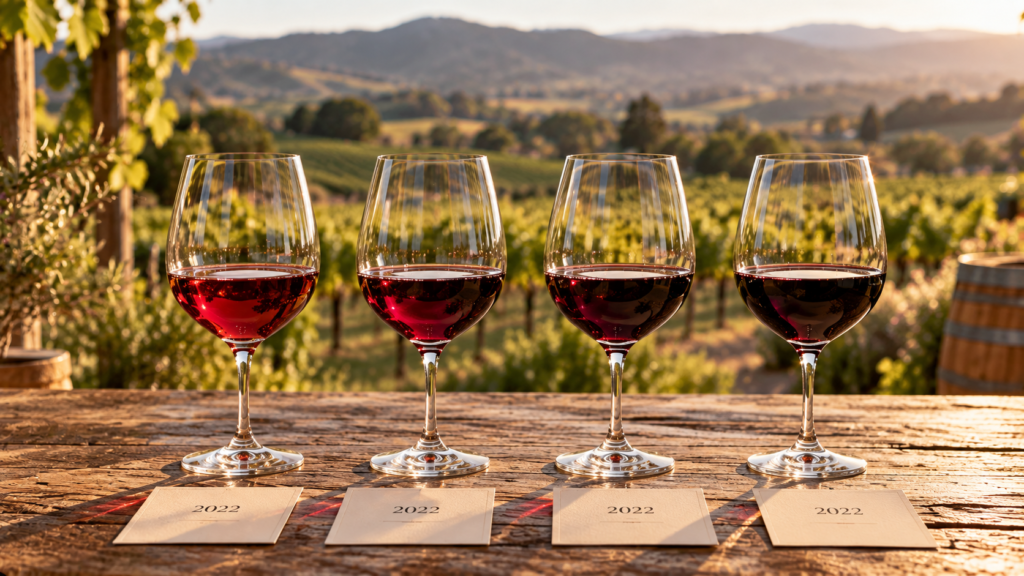
Vertical Tastings and Structural Changes Over Time
Vertical tastings (same wine, different vintages) reveal how structure evolves. For example:
- 2015 Katz Cabernet: robust, grippy tannins
- 2017: softened tannins, complex mid-palate
- 2020: primary fruit, youthful edge
Each vintage tells a structural story shaped by growing season, barrel use, and bottle aging.
Winemaking Decisions That Shape Structure
Choices in the winery influence final structure:
- Fermentation temp: High temps extract more tannin
- Cap management: Punchdowns yield gentle extraction
- Maceration length: More contact = more tannin
- Oak regimen: Custom-fit by varietal
At Mitchell Katz, every decision is made to balance power with finesse.
Cellaring and Home Storage Strategies
To protect structure over time:
- Store bottles at 55°F with 70% humidity
- Keep away from light and vibration
- Lay bottles on their side to keep cork moist
Track vintages using tasting notes and projected aging curves. Mitchell Katz reds typically evolve well for 5–12 years.
Wine Pairing Through the Lens of Structure
Structure affects pairing:
- High tannin: Needs protein (steak, lamb)
- Bright acidity: Cuts through fat (duck, rich pasta)
- Full body + oak: Matches grilled or smoked foods
Mitchell Katz’s bold reds shine with BBQ, aged cheeses, and rustic Italian cuisine.
Understanding Mouthfeel: The Texture of Red Wine
Mouthfeel refers to the tactile sensations a wine creates in the mouth such as its texture, weight, and consistency. It is an essential part of structure, yet often misunderstood. At Mitchell Katz Winery, careful balance of extraction and aging creates wines with rich, layered mouthfeel.
Components of Mouthfeel
- Viscosity: Influenced by alcohol and residual sugar
- Astringency: From tannins, especially in young reds
- Creaminess: Can be enhanced by oak or malolactic fermentation
- Grittiness: Usually from tannin overload or bottle sediment
Tasting Technique
To evaluate mouthfeel:
- Swirl wine to release aromatics
- Hold it in the mouth for 5–10 seconds
- Note texture on the tongue and cheeks
- Observe transition from entry to finish
Barrel Cooperage: Craftsmanship Behind the Oak
Barrel cooperage is an art form. The barrels used by Mitchell Katz are sourced from trusted coopers in France and the U.S., each known for specific grain tightness, seasoning, and toasting techniques.
Key Factors in Cooperage
- Grain Tightness: Tighter grains = slower oxygen exchange
- Air Seasoning: Natural drying enhances wood character
- Toast Levels: Affect aromatic and tannin release
Cooper Profiles
- Radoux (France): Subtle spice, ideal for Merlot
- World Cooperage (USA): Bolder profile, suits Zinfandel and Petite Sirah
Matching barrel to varietal is a crucial step in crafting structured, balanced wines.
The Chemistry of Wine Aging
Wine aging is both an art and a science. At a molecular level, aging involves:
- Oxidation: Micro-oxygenation through barrels softens tannins
- Polymerization: Tannin chains lengthen, creating smoother texture
- Esterification: New aroma compounds form
Bottle vs. Barrel Aging
- Barrel aging allows oxygen ingress and oak integration
- Bottle aging is reductive, preserving freshness but allowing slow evolution
Mitchell Katz wines benefit from both, with careful transitions from barrel to bottle.
Comparing Structural Profiles Across Varietals
Different grapes, different structures. Mitchell Katz produces:
- Cabernet Sauvignon: High tannin, bold body, great for aging
- Merlot: Softer tannins, plush mid-palate
- Petite Sirah: Dense tannins, deep color
- Malbec: Vibrant acidity, balanced grip
- Zinfandel: Jammy fruit, medium body, moderate tannin
Understanding these profiles helps consumers match wine to occasion, food, or cellar goals.
Consumer Palates and the Perception of Structure
Structure isn’t only chemistry, it’s perception. Palate preferences shape what consumers seek in a wine:
- Casual drinkers: Prefer softer, smoother, fruit-forward wines
- Enthusiasts: Appreciate grip, tension, and evolution
- Collectors: Seek structural depth and long aging curves
Mitchell Katz crafts wines that meet all these audiences. It is approachable when young, profound with age.
Final Thoughts and Future of Structured Winemaking
The future of wine structure includes:
- Lower-intervention oak (amphora, concrete)
- AI-assisted blending for balance
- More transparency on barrel aging
Yet for all the innovation, wineries like Mitchell Katz prove that craftsmanship and terroir still matter most. Their structured reds remain timeless, built to evolve and endure.
FAQs
What does wine structure mean in red wines?
Wine structure refers to the balance of tannins, acidity, alcohol, and body that gives red wine its texture and aging potential.
How does oak aging affect the taste and structure of wine?
Oak aging softens tannins, adds flavor compounds like vanilla and spice, and enhances mouthfeel by contributing additional phenolics.
Which Mitchell Katz wine has the most aging potential?
The single-vineyard Cabernet Sauvignon and Petite Sirah from Mitchell Katz are known for bold structure and long cellaring potential (10+ years).
Why are tannins important in red wine?
Tannins provide backbone, contribute to mouthfeel, and help preserve red wines over time by acting as antioxidants.
How should I store my Mitchell Katz wines for aging?
Store at 55°F, away from light and vibration, ideally with 60–70% humidity and bottles stored on their sides to preserve cork integrity.