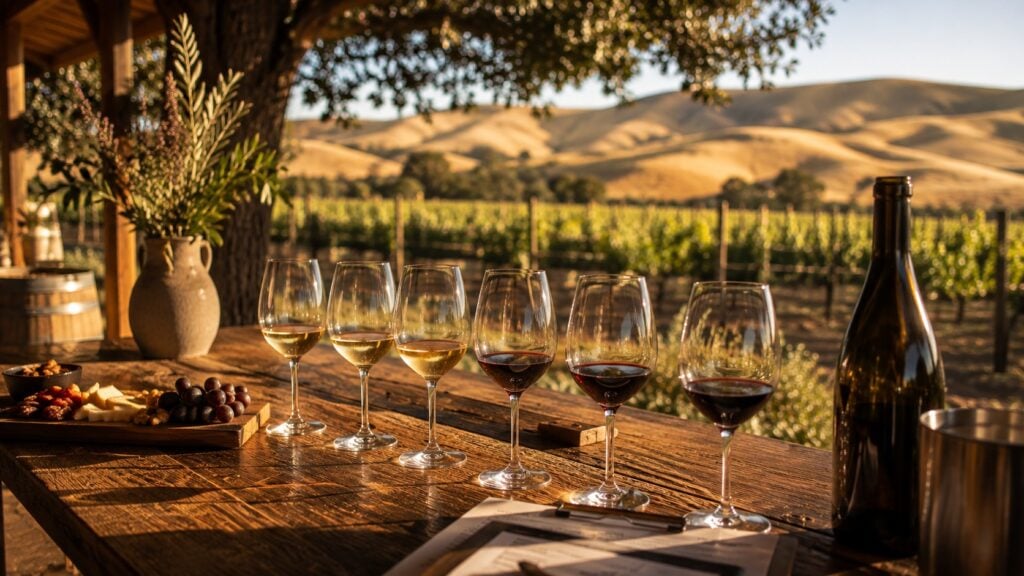
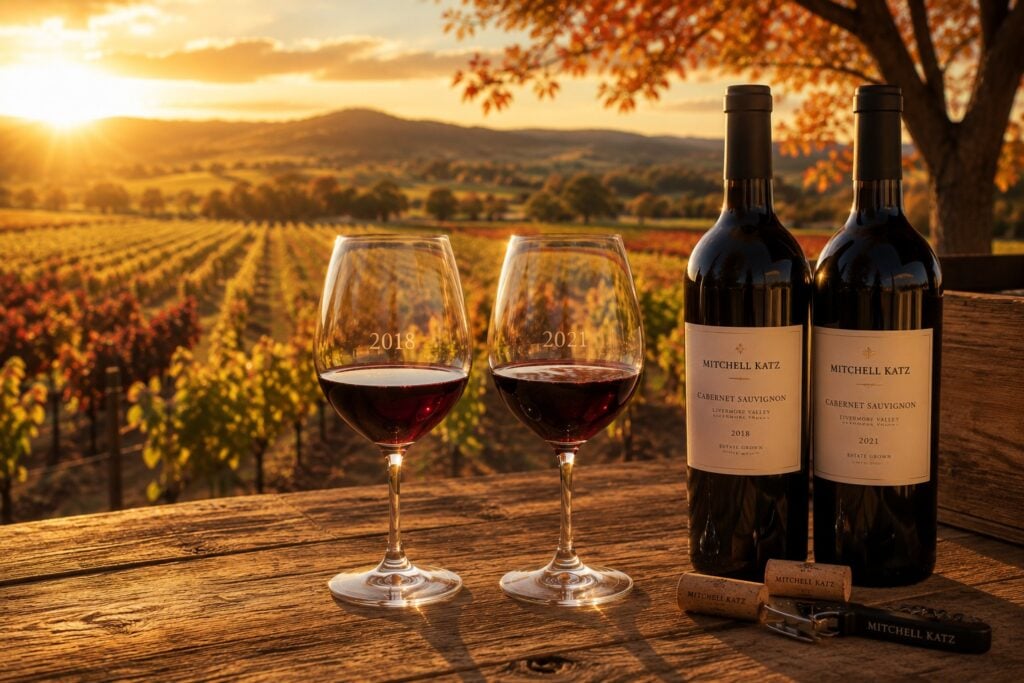
When you take your first sip of wine, the flavor is only part of the story. What you actually “taste” is largely what you smell. In fact, up to 80% of wine’s flavor profile comes from its aroma compounds. At Mitchell Katz Winery, this isn’t just trivia, it’s central to how wines are crafted, appreciated, and remembered.
What Are Wine Aromas?
Wine aromas are the volatile compounds released from the glass that interact with your olfactory receptors. They’re the reason a Cabernet might smell like ripe cherries or a Sauvignon like freshly cut grass. These aromatic notes give each wine its distinct character, even before the first sip touches your lips.
The Chemistry Behind Wine Aromas
Wine contains hundreds of aroma compounds, including esters, aldehydes, ketones, terpenes, and sulfur compounds. These molecules are influenced by grape variety, fermentation, aging method, and environmental conditions.
- Esters (e.g., fruity aromas): Formed during fermentation
- Terpenes (e.g., floral or citrus notes): Naturally found in grape skins
- Thiols (e.g., grapefruit, passionfruit): Prominent in certain whites like Sauvignon Blanc
- Lactones (e.g., coconut or cream): Emerge with oak aging
At Mitchell Katz Winery, the winemaking process is intentionally designed to preserve and enhance these aromatic signatures, from gentle grape handling to temperature-controlled fermentation.
Primary, Secondary, and Tertiary Aromas Explained
Primary Aromas
These stem directly from the grape variety and terroir. For example:
- Cabernet Sauvignon: Blackcurrant, mint
- Chardonnay: Green apple, lemon zest
- Syrah: Blackberry, violet
Secondary Aromas
Produced during fermentation and winemaking. Think:
- Yeast (brioche, toast)
- Malolactic conversion (buttery notes)
- Oak influence (vanilla, smoke)
Tertiary Aromas
These develop with aging:
- Earth, leather, tobacco
- Dried fruit, nutmeg, forest floor
Mitchell Katz wines often highlight the transition from vibrant primary fruit to nuanced tertiary elegance over time.
The Aroma Wheel: A Taster’s Map
Developed by Dr. Ann Noble, the wine aroma wheel categorizes scent descriptors into a hierarchy. It helps tasters move from broad families (like “fruity”) to specific notes (“black cherry” or “grapefruit”).
At Mitchell Katz Winery, wine educators use the wheel to guide tastings, helping guests build both vocabulary and confidence when describing what they smell.
How Livermore Valley Terroir Influences Aromatics
Livermore Valley’s unique climate, warm days, cool nights, and gravelly soils, plays a huge role in aroma development. The daily temperature swings allow grapes to retain acidity while developing complex aromatics.
- Cool evenings: Preserve delicate floral and citrus notes
- Gravelly soils: Stress vines just enough to concentrate flavors
- Dry climate: Reduces disease pressure, allowing full phenolic ripeness
This terroir-driven expression is evident in Mitchell Katz’s estate-grown fruit and partner vineyards, which consistently yield aroma-rich wines.
Sensory Science Meets Winemaking Art
Winemaker doesn’t rely solely on lab data. He smells the grapes, the fermenting must, and the aging barrels to make decisions. Sensory cues guide everything from harvest timing to blending choices.
Advanced techniques, like cold soaking and extended maceration, are used to maximize aroma extraction while preserving balance.
How to Train Your Nose Like a Pro
Want to get better at identifying wine aromas? Try these tips:
- Use an aroma kit: Train with essential oils or scent vials
- Smell everything: Herbs, spices, fruits—build a mental library
- Swirl the glass: Aeration releases more volatile compounds
- Practice blind sniffing: Identify scents with eyes closed
At the Mitchell Katz tasting room, guests are encouraged to explore with curiosity, not perfection. Aroma exploration is a journey, not a test.
How Oak Aging Enhances Aromatic Complexity
Oak aging introduces a world of aromatic depth to wine. The wood itself contains compounds like vanillin, lactones, and tannins that transform the wine over time. At Mitchell Katz Winery, careful selection of barrel type, French, American, or Hungarian, and toast level is part of the aroma engineering.
- Vanillin: Imparts sweet vanilla notes, especially from American oak
- Lactones: Add creamy, coconut-like aromas
- Toast level: Light toast preserves fruit; medium adds spice; heavy contributes smoky, charred tones
Barrel aging isn’t just about softening tannins, it’s a sculpting process. For example, the Zinfandel develops toasted caramel and cinnamon aromatics after 12–18 months in medium-toast barrels.
Mitchell Katz often experiments with mixed coopers to layer complex aromas. Winemaker in Mitchell Katz explains, “It’s like seasoning food. Each barrel adds a different aromatic spice to the wine.”
The Role of Fermentation Temperature in Aroma Retention
Temperature during fermentation dramatically affects which aromas are preserved or lost. Cooler fermentations (below 60°F) retain delicate esters, enhancing floral and fruity notes, ideal for whites like Sauvignon Blanc. Warmer temps (above 75°F) promote deeper extraction, yielding more robust reds.
Mitchell Katz Winery monitors temperature in real-time using jacketed tanks. Whites are cold-fermented to capture crisp citrus and green apple notes, while reds like Cabernet Sauvignon undergo controlled warmth for depth and structure without burning off nuanced aromatics.
Temperature decisions are varietal-specific and vintage-sensitive. In warmer years, slight adjustments help preserve aromatics that might otherwise evaporate.
The Impact of Harvest Timing on Aroma Profiles
Picking grapes too early or too late can drastically change a wine’s aroma. Early harvest: lean, herbaceous notes. Late harvest: richer, riper, and sometimes raisinated characteristics.
Mitchell Katz winemakers walk the vineyards daily during harvest season, crushing grape skins between fingers and sniffing for optimal aromatic maturity. In 2023, slightly delaying the Merlot harvest by 3 days allowed subtle red plum and cocoa notes to emerge.
Winemaking here balances sugar content (Brix) and aromatic development, favoring expressive, site-specific scents over uniform ripeness.
Wild vs. Cultured Yeasts: Scent Signatures Compared
Fermentation yeast dramatically influences wine’s aromatic fingerprint. Wild yeasts introduce spontaneous complexity, often unpredictable but rich. Cultured yeasts offer more control, targeted aroma enhancement, and cleaner finishes.
At Mitchell Katz Winery, both methods are used strategically:
- Wild yeasts: Used on select small-lot barrels to develop earthy, funky depth in Syrah and Petite Sirah
- Cultured yeasts: Ensure consistency in flagship varietals like Chardonnay and Cabernet
The result is a portfolio that feels both polished and soulful, aromatically nuanced, yet stylistically clean.
Barrel Toast Levels and Their Influence on Scent
Toast level affects how much heat the inside of a barrel is exposed to during manufacturing. Each level shapes aromas differently:
- Light toast: Subtle spice, preserves varietal fruit
- Medium toast: Adds vanilla, nutmeg, and clove
- Heavy toast: Offers coffee, smoke, and cocoa
Mitchell Katz’s 2022 Zinfandel Reserve aged in a blend of light- and medium-toast French oak shows vanilla upfront with a spicy black pepper finish, a direct result of barrel influence.
How Bottle Aging Evolves Aromatic Layers
Aromas continue to change after bottling, especially with proper cellaring. Primary fruit fades; secondary and tertiary notes take center stage.
A 5-year-old Cabernet shifts from black cherry and mint to tobacco, cedar, and fig. This evolution is a hallmark of quality and why Mitchell Katz includes vintage suggestions on tasting notes.
Bottle-aging experiments are underway at the winery, tracking how Livermore’s climate and bottle conditions influence aroma preservation long-term.
Glassware and Its Effect on Wine Aroma Perception
The shape of your glass affects how aromas concentrate. Tulip-shaped glasses capture volatile esters and direct them to the nose. Wide bowls increase surface area for oxygen exposure, releasing deeper scents.
At the tasting room, Mitchell Katz uses varietal-specific Riedel glasses:
- Merlot: Broad bowl — perfect for bringing out those soft, earthy notes.
- Cabernet: Tapered top to focus fruit and oak aromas
- Sauvignon Blanc: Narrow rim for citrus-forward concentration
Guests often remark how the same wine tastes dramatically different in various glassware, a sensory education moment.
Final Sip: Why Aromas Matter More Than You Think
Wine is more than taste, it’s memory, emotion, and scent intertwined. At Mitchell Katz Winery, crafting aromatic wines isn’t just a technical goal, it’s a philosophy. Each bottle tells a story not only of grapes and barrels, but of blossoms, spices, forest trails, and sunlit vineyards.
The next time you uncork a Mitchell Katz wine, pause before sipping. Let the scent guide you. There’s an entire world waiting in the glass.