Can you bring food to a winery? The short answer is: sometimes and at Mitchell Katz Winery in Livermore, guests are welcome to bring their own snacks or meals.
Every winery sets its own policies, so visitors should never assume outside food is permitted simply because another winery allowed it. Some wineries encourage picnics, others sell food on-site, and some restrict outside food because of licensing requirements, special events, limited seating, or operational considerations.
That makes checking the winery’s current policy before your visit an important first step.
At Mitchell Katz Winery, the experience is designed to make enjoying wine feel relaxed and approachable. Guests can bring food and turn their tasting into a leisurely wine-country outing rather than treating the experience as another stop to rush through.
For visitors planning a day in Livermore Valley wine country, bringing a picnic can also solve a practical problem: what do you do when you want something to eat between tastings without interrupting your day for a long restaurant meal?
A thoughtfully packed picnic lets you slow down, enjoy your surroundings, and discover how different foods interact with the wines in your glass.
There are, however, a few things worth knowing before filling a basket and heading to wine country.
Why Winery Outside-Food Policies Vary
There is no universal rule governing whether visitors can bring food to a winery.
A winery is both a hospitality destination and a working business. Each property has different facilities, permits, seating arrangements, food programs, tasting formats, and event schedules.
One winery may have expansive picnic tables and encourage guests to bring lunch. Another may operate a restaurant or culinary program and restrict outside food. A smaller tasting room may simply lack enough space to accommodate picnics.
Special events can change the rules as well.
A winery that normally welcomes outside food may have different policies during concerts, release weekends, private events, or other high-traffic occasions.
That is why one of the best habits for wine-country visitors is simple: check directly with each winery before arriving.
Look for information about:
- Outside food
- Reservations
- Seating
- Children
- Pets
- Large groups
- Outside beverages
- Special events
- Tasting duration
Checking ahead takes only a few minutes and can prevent an awkward situation after you’ve already packed lunch.
Can You Bring Food to Mitchell Katz Winery?
Yes. Mitchell Katz Winery is picnic-friendly, and guests are encouraged to bring their own snacks or meals to enjoy during their visit.
That makes the winery a convenient option for visitors who prefer to combine their wine tasting with food they have selected themselves.
You might arrive with a simple cheese-and-cracker spread, sandwiches from a local deli, or a picnic basket assembled for a leisurely afternoon.
The freedom to bring food is particularly useful when you’re visiting with people who have different preferences. Instead of finding one restaurant that satisfies everyone, your group can create a picnic with a variety of options.
It can also make the tasting experience more interesting.
Wine rarely exists in isolation. At the dinner table, it interacts with salt, fat, acidity, herbs, sweetness, texture, and countless other flavors. Trying a sip before and after a bite of food can reveal characteristics you might not have noticed otherwise.
A wine that seems firm on its own may become softer beside cheese. Fruit characteristics may seem brighter after something salty. A rich red may feel completely different when enjoyed alongside a savory bite.
That experimentation is part of the fun.
Why Livermore Valley Is Ideal for a Winery Picnic
Livermore Valley offers an appealing balance between California wine-country atmosphere and accessibility.
For Bay Area visitors, that makes it possible to build a wine-country day without necessarily committing to a long-distance getaway.
And picnicking fits naturally into that slower pace.
Think about the difference between two approaches to a winery day.
In the first, you arrive, taste quickly, leave, drive somewhere for lunch, wait for a table, eat, and then hurry to the next reservation.
In the second, you arrive with food already prepared, settle in, taste your wines, enjoy your picnic, talk with the people you’re visiting with, and give yourself enough time to appreciate where you are.
The second experience often feels less like checking destinations off a list and more like actually spending a day in wine country.
That doesn’t mean every Livermore winery permits picnics. Policies vary, and visitors should verify them individually.
But when you choose a picnic-friendly winery, bringing lunch can become part of the experience itself.
What Food Should You Bring to a Winery?
The best winery picnic food has three qualities: it travels well, is easy to serve, and works with the setting.
You don’t need to prepare an elaborate meal.
In fact, simplicity often works better.
A winery picnic is not the ideal place for a dish that requires six utensils, three serving bowls, constant refrigeration, and ten minutes of assembly.
Instead, choose foods that can be portioned easily and shared without much work.
Good options include:
Cheese
Cheese is a picnic classic for a reason.
A small selection provides plenty of variety without taking up much space. Consider combining different textures rather than bringing several similar cheeses.
For example, you might pack one soft cheese, one firm aged cheese, and one mild option.
Keep perishable foods properly chilled until you’re ready to eat them.
Crackers and Bread
Neutral crackers and sliced bread provide texture while allowing the wine and accompanying ingredients to remain the focus.
Avoid bringing only heavily seasoned crackers. Strong garlic, spice, or artificial flavoring can dominate your palate and make wines harder to evaluate.
Charcuterie
Cured meats can be convenient because they’re easy to portion and pair naturally with bread, cheese, and other picnic foods.
Prosciutto, salami, and similar items can create a satisfying spread without requiring a complete plated meal.
Again, appropriate food-safety precautions matter, especially on hot Livermore afternoons.
Fresh Fruit
Grapes may seem almost too obvious at a winery, but they’re not your only option.
Apples, pears, berries, peaches, and other seasonal fruits can bring freshness and contrast to a picnic.
Choose fruits that are relatively easy to eat and unlikely to create a major mess.
Nuts
Almonds, walnuts, pistachios, and other nuts are compact, easy to transport, and useful for filling out a picnic spread.
Lightly salted versions often work better than intensely flavored varieties if your goal is to pay attention to the wine.
Sandwiches
For something more substantial, sandwiches are hard to beat.
They’re portable, require minimal cleanup, and can be prepared for different dietary preferences.
Keep sauces under control, though. A sandwich dripping across the table is considerably less charming in practice than it sounds while packing it.
Vegetables and Dips
Cut vegetables can add freshness and crunch.
Carrots, cucumber, bell peppers, and similar choices travel well when properly stored. Pair them with a mild dip for an easy shared snack.
Easy Winery Picnic Food Ideas
You don’t need a gourmet menu to create an enjoyable Livermore winery picnic.
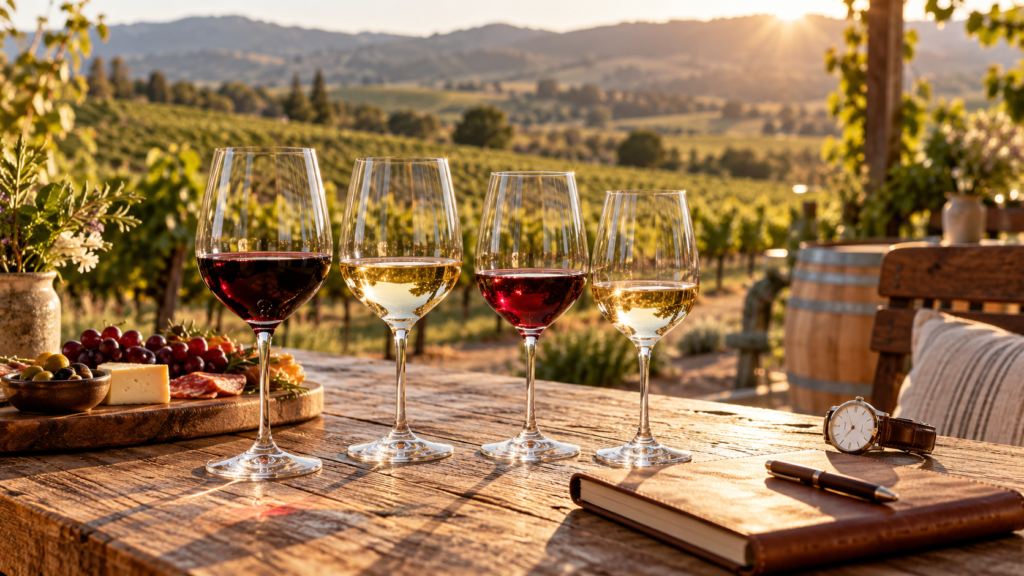
A balanced basket might contain:
- One or two cheeses
- Crackers or sliced baguette
- Cured meat
- Fresh fruit
- Nuts
- Olives
- A few vegetables
- Sandwiches or wraps for something substantial
- Water
The goal isn’t to build the world’s most elaborate charcuterie board.
Think of your picnic like a good supporting actor. It should make the experience better without demanding all the attention.
If you’re interested in learning more about intentionally matching food with specific wine styles, that deserves deeper treatment than a picnic guide can provide.
For a casual picnic, variety is usually enough. Give everyone several flavors and textures to experiment with while tasting.
Foods You May Want to Leave at Home
Technically portable doesn’t always mean winery-friendly.
Some foods create aromas powerful enough to interfere with tasting.
Wine appreciation depends heavily on your sense of smell. A pungent dish placed in the middle of a tasting area can affect not only your experience but potentially the experience of people nearby.
Consider avoiding extremely aromatic foods, especially anything dominated by strong garlic, intense spices, or lingering odors.
Very messy foods are another questionable choice.
Sticky sauces, overflowing tacos, soups, and dishes requiring extensive preparation can turn a relaxing picnic into a logistical project.
Then there is temperature.
Livermore can experience warm weather, so foods requiring refrigeration need to be stored safely. A soft cheese sitting in a hot car for hours isn’t just unappetizing, it can become a food-safety issue.
Pack with the weather in mind.
What to Pack for a Winery Picnic
Food gets most of the attention, but a few practical supplies can make your picnic much easier.
Consider bringing reusable or disposable plates, napkins, utensils when needed, and a small bag for collecting your trash.
A cooler or insulated bag is particularly valuable for cheese, meats, dips, and other perishable foods.
Bring water as well.
Wine tasting and hydration belong together, especially during warm weather.
You may also want sunscreen and sunglasses if you’re expecting to spend time outside.
What shouldn’t you automatically pack?
Your own alcoholic beverages.
Outside-food permission should never be interpreted as outside-alcohol permission.
Winery Picnic Etiquette: What Visitors Should Know
Bringing your own food doesn’t mean turning a winery into your private backyard.
A little consideration goes a long way.
First, respect designated seating. If staff members direct you toward a particular picnic or patio area, use that space rather than relocating tables or setting up elsewhere.
Second, keep your footprint reasonable.
A picnic for four people shouldn’t require enough equipment to cater a wedding.
Third, clean up after yourself.
Napkins, packaging, food scraps, bottle caps, and other waste should not become someone else’s responsibility simply because you’re visiting a hospitality business.
Fourth, be conscious of neighboring guests.
Music, large decorations, games, and other additions that might be appropriate for a private party aren’t necessarily appropriate during a standard tasting visit.
If you’re planning a celebration or bringing a larger group, contact the winery ahead of time.
Finally, remember why you’re there.
A winery picnic works best when the food complements the tasting experience rather than taking over the space.
Can You Bring Your Own Wine or Alcohol?
Do not assume that permission to bring food means you can bring outside wine, beer, spirits, or other alcoholic beverages.
These are completely separate questions.
Alcohol service is regulated, and wineries have their own policies and licensing obligations.
If you’re uncertain about what beverages are permitted, ask the winery directly before your visit.
At a winery, the simplest approach is to enjoy the wines offered by the property and bring nonalcoholic beverages only where permitted.
Water is always worth having available during a wine-country day.
How to Pair a Picnic With Your Wine Tasting
One of the best parts of bringing food to a winery is discovering how food changes your perception of wine.
You don’t need professional tasting credentials to notice the difference.
Try this simple experiment.
Taste the wine first without eating anything. Pay attention to what you notice: fruit, acidity, tannin, body, aroma, finish, or simply whether it feels light or rich.
Then take a bite of food.
Taste the wine again.
Did anything change?
Maybe the fruit seems more noticeable. Perhaps the tannins feel softer. Maybe a flavor you barely noticed before suddenly becomes obvious.
That transformation is one reason food-and-wine pairing can become so fascinating.
You don’t need to identify every aroma or use specialized vocabulary. Your reaction is enough.
“This tastes better after the cheese” is a perfectly legitimate tasting observation.
Wine is meant to be experienced, not passed like an exam.
Final Thoughts
So, can you bring food to a winery?
At some wineries, absolutely. At others, outside food may be limited or prohibited. The key is checking the individual property’s policy before packing your basket.
For visitors heading to Mitchell Katz Winery in Livermore, the answer is refreshingly straightforward: the winery is picnic-friendly, and guests are encouraged to bring snacks or meals.
Keep your picnic simple. Pack foods that travel well. Store perishables safely. Bring water. Respect the winery’s seating and hospitality policies. And give yourself enough time that lunch doesn’t become another item on a rushed itinerary.
Most importantly, experiment.
Take a sip before trying the cheese. Taste it again afterward. Pass the bread. Try something salty. Notice what changes.
You don’t need to find the “correct” pairing.
Sometimes the best discovery in wine country is simply realizing that a particular glass, a particular bite, and a particular afternoon belong together.
FAQs
Can you bring outside food to a winery?
Some wineries allow outside food while others restrict it. Always check the individual winery’s current policy before arriving.
Which Livermore wineries allow outside food?
Policies differ among Livermore wineries. Mitchell Katz Winery currently identifies itself as picnic-friendly and encourages visitors to bring snacks or meals.
What food should I bring to a winery picnic?
Choose portable foods such as cheese, crackers, charcuterie, fruit, nuts, sandwiches, vegetables, and bread. Keep foods requiring refrigeration properly chilled.
Can you bring a picnic to a wine tasting?
Yes, when the winery permits outside food. Check reservation requirements, designated picnic areas, and current policies beforehand.
What should I pack for wine tasting in Livermore?
For a picnic-friendly tasting, consider food, water, napkins, serving essentials, an insulated cooler, sunscreen, and sunglasses. Confirm individual winery policies before bringing additional items.