Wine tasting can sound surprisingly intimidating when you have never done it before.
You might picture experienced wine drinkers swirling glasses with perfect technique, identifying obscure aromas, and discussing tannins, vintages, and vineyards while you quietly wonder whether you are even holding the glass correctly.
Fortunately, a first-time wine tasting in Livermore does not have to feel anything like that.
Wine tasting is ultimately about discovering what you enjoy. You do not need a sophisticated palate, an encyclopedic knowledge of grapes, or a collection of impressive wine vocabulary. You simply need curiosity and a willingness to try something new.
And Livermore Valley is an especially inviting place to begin.
At a winery such as Mitchell Katz Winery, the tasting experience is designed to be relaxed, conversational, and informative. Instead of treating wine like a test you have to pass, a good tasting gives you the opportunity to slow down, compare different wines, ask questions, and begin recognizing your own preferences.
If you’re planning your first winery visit, here’s what you can expect from the moment you arrive until the final pour.
Why Livermore Valley Is a Great Place for Your First Wine Tasting
California wine country stretches far beyond the destinations that usually dominate postcards and travel magazines.
Livermore Valley has its own long-established wine culture, scenic vineyard landscapes, and distinctive sense of place. For Bay Area residents in particular, it offers the chance to experience wine country without necessarily turning the outing into a multi-day vacation.
But geography is only part of the appeal for beginners.
Your first tasting is much easier to enjoy when the atmosphere feels approachable. Instead of worrying about whether you know enough about wine, you can concentrate on what is actually in your glass.
That mindset matters.
Think of your first winery visit like visiting an art gallery for the first time. Nobody expects you to walk through the door already knowing every artist, technique, or historical movement. You look around. You notice what catches your attention. You ask questions. Over time, your preferences become clearer.
Wine works much the same way.
One Cabernet Sauvignon might immediately appeal to you while another doesn’t. You might discover that you enjoy refreshing white wines more than the bold reds you assumed you were “supposed” to like.
There is no wrong answer.
Before Your First Winery Visit: What to Know
A little preparation can make your first wine tasting considerably more relaxing.
Start by checking the winery’s current visitor information before leaving home. Look for opening hours, tasting options, reservation policies, group-size limits, food policies, and other practical details.
At Mitchell Katz Winery, tastings are structured around curated flights of handcrafted wines in a relaxed setting. Standard reservations accommodate small groups, helping preserve the more personal nature of the tasting experience.
Reservations are particularly useful because they remove uncertainty. Instead of arriving and wondering whether there will be room, you know your tasting experience has been planned.
You should also avoid arriving hungry.
Wine contains alcohol, and tasting several wines on an empty stomach can affect you more quickly than expected. Eat beforehand, drink water, and arrange transportation responsibly whenever needed.
Your goal isn’t to prepare for an examination.
It’s simply to arrive comfortable, unrushed, and ready to explore.
What Happens When You Arrive at a Winery?
For many beginners, this is the biggest mystery.
What do you actually do when you walk through the door?
Usually, it’s remarkably simple.
You’ll check in, let the host know about your reservation if you have one, and be shown where you’ll be tasting. Depending on the winery and weather, that might be inside a tasting room, at a bar, around a table, or outdoors.
Mitchell Katz Winery offers an indoor tasting room as well as an outdoor patio overlooking the vineyard surroundings.
Once you’re settled, your host will generally explain the tasting format and introduce the wines being poured.
That’s it.
You don’t need to announce that you’re a beginner, although doing so can actually make the experience better.
Saying something as simple as, “This is our first wine tasting,” gives your host useful context. A knowledgeable tasting room host can explain unfamiliar terms, provide extra background, and help you navigate the experience without overwhelming you.
There is no prize for pretending you already know everything.
Curiosity makes a tasting more interesting.
How a Wine Tasting Flight Works
One of the first terms you may encounter is wine flight.
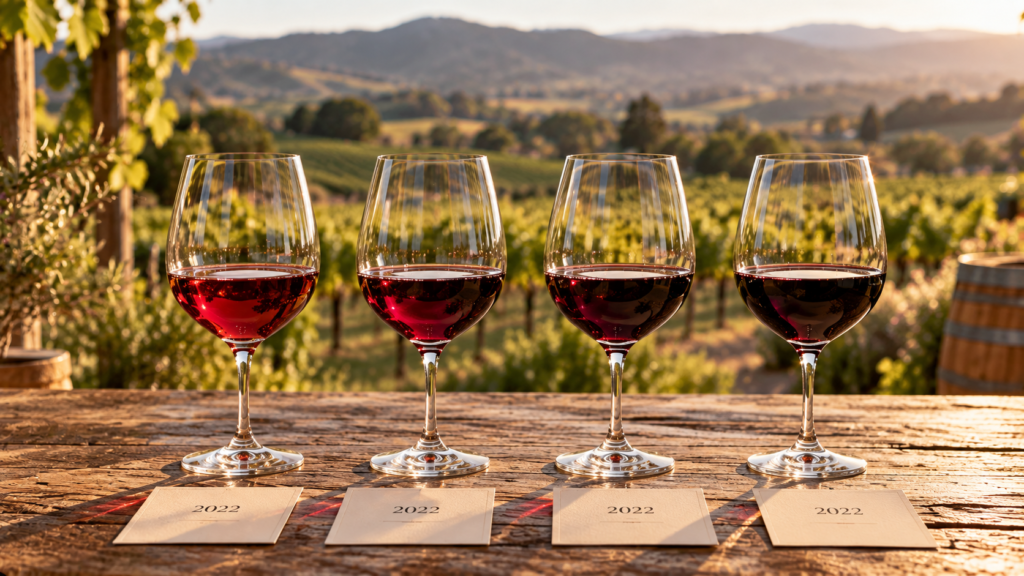
A flight is simply a selection of wines presented for tasting. Rather than ordering one full glass, you receive smaller pours that allow you to experience several wines.
The exact lineup varies.
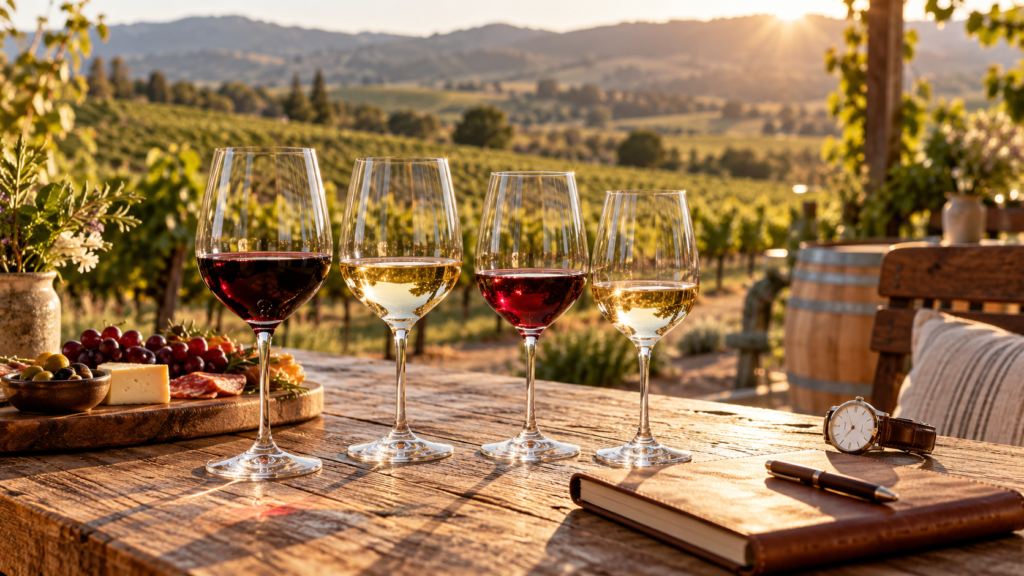
You might taste white wines, reds, rosé, sparkling wine, dessert wine, or a combination. Some flights focus on a particular grape variety, vineyard, vintage, or style.
At Mitchell Katz Winery, the tasting lineup can include selections from its handcrafted, single-vineyard wines, with offerings changing according to releases and availability.
Your host will typically explain what you’re drinking as the tasting progresses.
That might include:
- The grape variety
- The vineyard
- The vintage
- How the wine was made or aged
- Notable aromas or flavors
- Characteristics of the growing site
- The story behind the wine
You don’t need to memorize any of it.
Instead, listen for details that interest you and compare them with what you’re experiencing in the glass.
If you want a deeper explanation of vintages, varietals, tasting notes, and flight terminology, this is an ideal place to connect readers with Mitchell Katz Winery’s existing guide.
What Should You Actually Do With the Wine?
Here is where many first-time visitors start overthinking things.
You’ve received your first pour.
Now what?
Start by looking at it.
Notice the color. Is it pale and almost translucent? Golden? Ruby red? Deep purple?
Then smell it.
You can gently swirl the glass to help release aromas. You don’t need a dramatic restaurant-style swirl. A small circular motion while keeping the base of the glass on the table works perfectly well for beginners.
Bring the glass toward your nose and notice whatever stands out.
Then taste.
Take a small sip and let the wine move across your palate before swallowing or using a provided spittoon if you prefer not to consume it.
Pay attention to your immediate reaction.
Do you like it?
That’s already valuable information.
You can then think about why.
Perhaps it tastes fruity. Maybe it’s crisp and refreshing. Perhaps it feels rich, smooth, dry, tart, spicy, or powerful.
The goal isn’t to correctly identify twelve different aromas.
The goal is to pay attention.
You Don’t Need to Know Wine Vocabulary
One of the easiest ways to make wine unnecessarily intimidating is to believe there is a secret language everyone else understands.
There isn’t.
Wine professionals certainly use specialized terminology, but you don’t need it to communicate your preferences.
Suppose your host asks what you think of a wine.
“This tastes really smooth to me” is useful.
“I like how fruity this is” is useful.
“This feels too strong for me” is useful.
“I don’t know why, but I really like this one” is also useful.
Your personal reaction matters more than performing expertise.
Over time, you may naturally begin learning terms such as acidity, body, tannin, finish, oak, and terroir. Those words can help you describe what you’re experiencing more precisely.
But vocabulary should help you understand wine and not prevent you from enjoying it.
How to Discover What Wines You Actually Like
Your first wine tasting offers something that reading labels in a store cannot: comparison.
Imagine tasting one wine in isolation. You may know that you like it, but you have little context for understanding why.
Now imagine tasting several wines consecutively.
Suddenly, differences become easier to notice.
One feels lighter.
Another seems fruitier.
A third has more structure.
A fourth leaves flavors lingering longer after you swallow.
This comparison is one of the most valuable parts of wine tasting for beginners.
Rather than asking, “What wine is best?” ask yourself:
Which wine would I most want another glass of?
That question strips away ratings, prestige, price, and expectations.
Your answer is about your palate.
You may also discover patterns. Perhaps you consistently prefer fuller-bodied reds. Maybe crisp white wines catch your attention. Perhaps you’re surprised by a varietal you had never considered buying.
Keep a few notes on your phone if you want to remember favorites.
They don’t need to be elaborate.
“Really liked this one, smooth, dark fruit.”
That’s enough.
Over several tastings, those simple observations can build a remarkably useful map of your preferences.
Talking With Your Tasting Room Host
A good tasting room host is one of the most valuable resources during your first winery visit.
Ask questions.
You might ask:
“What makes this wine different from the previous one?”
“Where were these grapes grown?”
“What would you pair this with?”
“Is this considered a lighter or fuller-bodied wine?”
“Why does this one taste drier to me?”
“Which wine would you recommend for someone who usually likes ___?”
Questions turn passive drinking into active discovery.
At Mitchell Katz Winery, knowledgeable hosts guide guests through the wines while sharing information about the winemaking process and family history.
That storytelling can give context to what is in your glass.
Mitchell Katz Winery was established in 1998 and has built its identity around handcrafted wines and Livermore Valley vineyard expression.
When you learn where grapes were grown and why a winemaker made certain choices, wine stops feeling like an anonymous beverage.
It becomes a product of a particular place, season, vineyard, and person.
Do You Have to Finish Every Pour?
No.
This surprises some first-time visitors.
A wine tasting isn’t a challenge to finish everything placed in front of you. The objective is to taste the wines.
If you don’t want to finish a pour, that’s completely acceptable.
Depending on the tasting setup, wineries may provide a vessel for unwanted wine. Spitting wine after tasting is also normal in professional and educational tasting environments because it allows people to evaluate multiple wines while limiting alcohol consumption.
There’s no reason to feel awkward about pacing yourself.
In fact, slowing down helps preserve your ability to notice differences as the tasting continues.
Water is equally important.
Drink it throughout the experience rather than waiting until the end.
What Makes Wine Tasting at Mitchell Katz Winery Different?
For a first-time visitor, smaller details can define the entire experience.
Mitchell Katz Winery describes its Livermore tasting experience as relaxed and personalized, centered on curated flights and knowledgeable hosts.
The winery is family-owned and traces its story to 1998, when Mitchell Katz established the winery in honor of his grandfather.
Its focus on vineyard-driven wines also gives visitors an opportunity to understand an important concept early in their wine journey: where grapes grow can influence what ends up in the glass.
Two wines made from similar grape varieties don’t necessarily taste identical.
Soil, climate, vineyard conditions, farming, harvest timing, fermentation, aging, and countless winemaking decisions all contribute to the final wine.
At Mitchell Katz, the single-vineyard focus creates a natural opportunity to explore those differences through tasting rather than merely reading about them.
For beginners, this makes wine education tangible.
“Terroir” may sound abstract when you read the word online.
It becomes much easier to understand when someone pours a wine, tells you where it came from, and lets your senses complete the lesson.
Common First-Time Wine Tasting Questions
Can I go wine tasting if I don’t know anything about wine?
Absolutely. You don’t need prior wine knowledge to enjoy a tasting.
In fact, your first tasting is an opportunity to begin learning what you enjoy. A good host should be able to meet you at your experience level without making the process intimidating.
What if I don’t like one of the wines?
That’s normal.
Wine preferences are personal. You aren’t expected to love every pour.
Instead of viewing a wine you dislike as a failed tasting, use it as information. Ask yourself what you didn’t enjoy. Was it too dry? Too bold? Too tart? Too sweet?
Learning what you don’t like can be just as helpful as finding a favorite.
Should I pretend to notice the flavors the host describes?
No.
A host might mention blackberry, cherry, vanilla, herbs, spice, citrus, flowers, or dozens of other tasting characteristics.
You might notice them.
You might notice something completely different.
A tasting note isn’t an answer key.
People vary in sensory perception and personal associations, so describing what you genuinely experience is more useful than trying to reproduce someone else’s notes.
Is it okay to ask basic questions?
Yes.
“What’s a vintage?”
“What does dry mean?”
“Why do people swirl wine?”
Those are perfectly reasonable questions.
Every knowledgeable wine drinker started without knowing the answers.
Can I visit a winery if I prefer white wine?
Of course.
Wine tasting isn’t reserved for Cabernet enthusiasts. Depending on the current lineup, wineries may offer reds, whites, rosés, sparkling styles, dessert wines, or other selections.
Tell your host what you usually enjoy.
How many wineries should a beginner visit in one day?
There is no universal ideal number.
For a first trip, quality matters more than quantity.
Leaving enough time between reservations allows you to enjoy each location, hydrate, eat, travel safely, and remember what you tasted.
Three relaxed experiences will often be more memorable than trying to squeeze in as many stops as physically possible.
Can I ask for recommendations based on wines I already drink?
Yes, and that’s often one of the easiest ways to start a conversation.
Even if all you can say is, “I usually like Sauvignon Blanc” or “I tend to prefer smoother red wines,” your host has useful information.
Making Your First Livermore Winery Visit Memorable
The best way to approach your first tasting is to forget about doing it perfectly.
You will probably encounter unfamiliar grapes.
You may hear terms you don’t understand.
You might struggle to smell the blackberry everyone else seems convinced is in the glass.
None of that matters.
Pay attention to what interests you.
Ask questions.
Compare wines.
Notice your surroundings.
Write down the name of something you love.
Take a photograph of a label if you want to remember it.
And give yourself permission to simply enjoy the experience.
Wine appreciation develops through repetition, not memorization.
The more wines you thoughtfully taste, the easier it becomes to recognize patterns in your own palate. Eventually, terms that initially sounded mysterious begin making intuitive sense because you have experienced them rather than merely studied them.
Your first tasting is simply the starting point.
Final Thoughts: Your First Wine Tasting Should Feel Like Discovery, Not a Test
A first-time wine tasting in Livermore doesn’t require expertise.
It requires curiosity.
From checking in and receiving your first flight to comparing wines and talking with your host, the entire experience is designed around exploration.
You may leave knowing the difference between two varietals you had never tried before. You might finally understand what people mean when they describe a wine as full-bodied. You might discover that the wine style you assumed you’d love isn’t actually your favorite.
Or you might simply leave thinking, “I really liked that bottle.”
All of those outcomes are worthwhile.
Livermore Valley offers an inviting setting for that first step into wine country, and Mitchell Katz Winery’s relaxed, personalized approach gives beginners an opportunity to explore handcrafted wines without feeling that they need to arrive as experts.
Because ultimately, wine tasting isn’t about proving how much you know.
It’s about paying attention to what’s in the glass, discovering what speaks to your palate, and enjoying the experience along the way.
FAQs
What should I expect at my first wine tasting in Livermore?
Expect to check in, get settled in the tasting area, and sample a curated flight of smaller wine pours. A host will usually introduce each wine and answer questions while you compare flavors and discover your preferences.
How does wine tasting work for beginners?
A winery typically serves several small pours rather than full glasses. You can look at the wine, smell it, taste a small amount, and compare it with the other selections. No previous wine knowledge is required.
How long does a wine tasting at Mitchell Katz Winery take?
Mitchell Katz Winery currently lists its standard tasting experience at approximately 60–75 minutes, giving guests time to experience the wines and interact with their tasting host without rushing.
Do I need to know about wine before visiting a Livermore winery?
No. Wine tastings are an excellent way to learn about wine. Knowing what you already enjoy can be helpful, but even complete beginners can discover preferences by comparing different wines and asking their host questions.
What should I wear for wine tasting in Livermore Valley?
Wear comfortable clothing appropriate for the season and consider layers if you’ll spend time outdoors. Comfortable footwear is useful around winery properties, and avoiding strong fragrances helps preserve the sensory tasting experience.