Walk into almost any wine shop or winery, and you’ll likely overhear conversations about tannins, minerality, acidity, body, terroir, and finish. For someone who simply wants to enjoy a good glass of wine, it can feel like entering a conversation in a completely different language.
The good news is that appreciating wine doesn’t require memorizing complicated terminology or earning a sommelier certification. In fact, some of the happiest wine lovers know very little about the technical side of winemaking. They simply know what they enjoy and remain curious enough to keep exploring.
Wine appreciation is less about passing a test and more about discovering experiences, flavors, stories, and memories. Every bottle reflects countless decisions, from the vineyard and the weather to the winemaker’s philosophy. Understanding a few simple principles can help you recognize those differences without feeling overwhelmed.
Whether you’re just beginning your wine journey or looking to enjoy wine with greater confidence, this guide will show you how to appreciate wine naturally, one glass at a time.
Why So Many People Feel Intimidated by Wine
Wine has earned a reputation for being exclusive. Movies, television, and social media often portray wine experts swirling glasses dramatically while describing aromas of “wet stone,” “forest floor,” or “freshly sharpened pencil.”
For beginners, this can create unnecessary pressure. Many people worry about saying the wrong thing or choosing the wrong bottle.
The reality is much simpler.
Wine professionals developed specialized vocabulary because they need consistent ways to communicate with one another. Those terms aren’t requirements for enjoying wine, they’re simply tools.
Think about music. You don’t need to understand music theory to know when a song moves you. Likewise, you don’t need advanced wine knowledge to recognize a bottle you’ll happily buy again.
The most experienced wine lovers started exactly where you are now: by taking one sip at a time.
The Truth About Wine Appreciation
One of the biggest misconceptions is that appreciating wine means identifying dozens of aromas and flavors perfectly.
It doesn’t.
Wine appreciation is about paying attention.
Every bottle tells a story. Some are bright and refreshing. Others are rich and comforting. Some remind you of summer fruit, while others evoke baking spices or chocolate.
Rather than asking yourself, “What should I taste?” try asking:
- Do I enjoy this wine?
- Would I drink another glass?
- What foods would pair well with it?
- Does it feel light or rich?
- Is it refreshing or bold?
These simple questions are often far more useful than trying to identify obscure tasting notes.
Over time, your palate naturally becomes more observant without any formal training.
Start with What You Already Enjoy
Many beginners believe they should immediately start drinking expensive or highly acclaimed wines.
Instead, begin with wines you genuinely like.
If you enjoy fresh fruit flavors, you might naturally gravitate toward vibrant white wines or lighter reds.
If you prefer richer flavors, fuller-bodied reds may become favorites.
There’s no universal “best wine.” Personal preference plays a significant role.
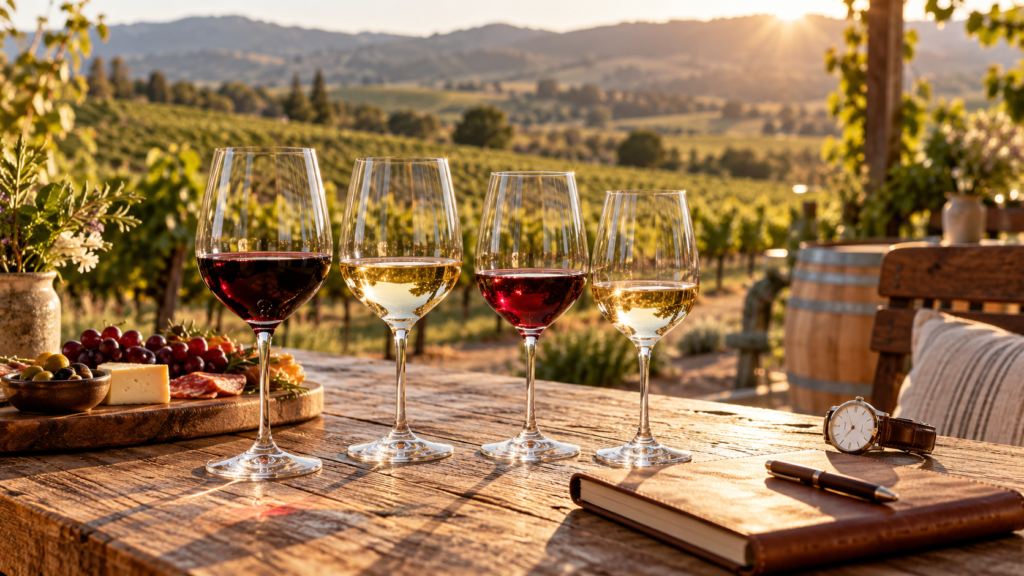
A helpful exercise is keeping a small wine journal.
After trying a bottle, write down:
- The wine’s name
- Whether you liked it
- What you ate with it
- Two or three words describing the experience
- Whether you’d buy it again
Notice that you don’t need professional vocabulary.
You might write:
- Smooth
- Fruity
- Bright
- Rich
- Easy to drink
- Dry
- Refreshing
- Bold
Over time, patterns emerge.
You may discover you consistently enjoy wines with brighter acidity or softer tannins. These observations become your personal guide for future purchases.
The Five Things to Notice in Every Glass
Instead of trying to memorize dozens of tasting terms, focus on five simple characteristics.
1. Appearance
Hold your glass against a light background.
Ask yourself:
- Is the wine pale or dark?
- Clear or cloudy?
- Bright or deep in color?
The color can offer clues about the grape variety, age, and style, but don’t worry about drawing conclusions just yet. Simply observe.
2. Aroma
Before taking a sip, gently swirl the wine.
This releases aromatic compounds.
Take a slow smell.
Don’t force yourself to identify exact fruits.
Instead ask:
Does it remind me of something?
Maybe cherries.
Maybe flowers.
Maybe vanilla.
Maybe fresh herbs.
Even if your answer is simply “it smells fresh,” that’s perfectly valid.
3. Taste
Now take a small sip.
Let it move across your tongue.
Notice whether the wine feels:
- Sweet
- Dry
- Fruity
- Crisp
- Rich
- Smooth
Again, there are no wrong answers.
4. Texture
Wine isn’t only about flavor.
It’s also about feel.
Does it seem:
- Light
- Creamy
- Silky
- Velvety
- Crisp
- Full-bodied
Texture often leaves an even stronger impression than flavor.
5. Finish
After swallowing, notice how long the flavors remain.
Some wines disappear quickly.
Others linger for many seconds.
Neither is automatically better.
Different styles simply create different experiences.
Learning to notice the finish is one of the easiest ways to deepen your appreciation without learning any complicated terminology.
Why There Is No “Right” Answer in Wine
One of the greatest lessons in wine appreciation is understanding that taste is personal.
Two experienced tasters can evaluate the same wine and describe it differently.
Why?
Because taste depends on:
- Personal memories
- Genetics
- Mood
- Food you’ve recently eaten
- Temperature
- Glassware
- Environment
Someone raised around citrus orchards may notice lemon aromas immediately.
Someone else might think of green apples instead.
Both observations can be equally accurate.
This is why trusting your own palate is so important.
Instead of trying to impress others with technical language, focus on describing what the wine genuinely reminds you of.
That honesty builds confidence much faster than memorizing tasting notes.
How Your Environment Changes What You Taste
One surprising aspect of wine appreciation is how much your surroundings influence the experience.
The exact same wine can seem completely different depending on where and how you enjoy it.
Lighting, temperature, background music, conversation, and even the glass you’re using all play subtle roles. A wine enjoyed outdoors on a sunny afternoon may feel brighter and more refreshing than when it’s poured indoors on a cold evening.
Food has an even greater impact. A crisp white wine that tastes wonderfully vibrant on its own may become softer and more rounded when paired with seafood. Likewise, a bold red that feels powerful by itself can become beautifully balanced alongside a grilled steak or hearty pasta.
This is one reason winery visits are so memorable. You’re not just tasting wine, you’re experiencing it in the place where it’s was crafted, surrounded by the vineyard, the atmosphere, and often the people who helped create it.
At boutique wineries like Mitchell Katz Winery in Livermore Valley, tasting wines in this setting helps visitors connect each glass with the story behind it. That personal connection often makes the experience more meaningful than simply opening a bottle at home.
Learning by Visiting Wineries
Reading about wine is helpful, but there is no substitute for tasting it in the environment where it is made. Visiting a winery transforms wine from a beverage into a story. You begin to understand how the vineyard, climate, grape varieties, and winemaking philosophy all contribute to what ends up in your glass.
A winery visit is also one of the best ways to build confidence because you can ask questions in a relaxed setting. Most tasting room staff are passionate about sharing their knowledge and want guests to enjoy the experience and not feel intimidated by it.
When visiting Mitchell Katz Winery in Livermore Valley, don’t worry about using technical wine vocabulary. Instead, describe what you’re experiencing in your own words. Saying, “This tastes bright and refreshing,” or “I like how smooth this is,” is just as meaningful as using formal tasting terminology.
A few simple questions can make your visit even more rewarding:
- What inspired this wine?
- Which foods pair especially well with it?
- What makes this vintage unique?
- Which wines are favorites among the winery team?
- What grape varieties thrive in Livermore Valley?
These conversations create lasting memories and deepen your appreciation for the craftsmanship behind every bottle.
Simple Ways to Expand Your Palate
Appreciating wine is much like appreciating music or art, the more styles you experience, the more you begin to notice subtle differences.
The goal isn’t to drink more wine. It’s to drink more intentionally.
Here are a few easy ways to broaden your palate without feeling overwhelmed.
Compare Similar Wines
Instead of tasting five completely different wines, compare two that share similarities.
For example:
- Two Cabernet Sauvignons from different regions
- Two Chardonnays made using different winemaking techniques
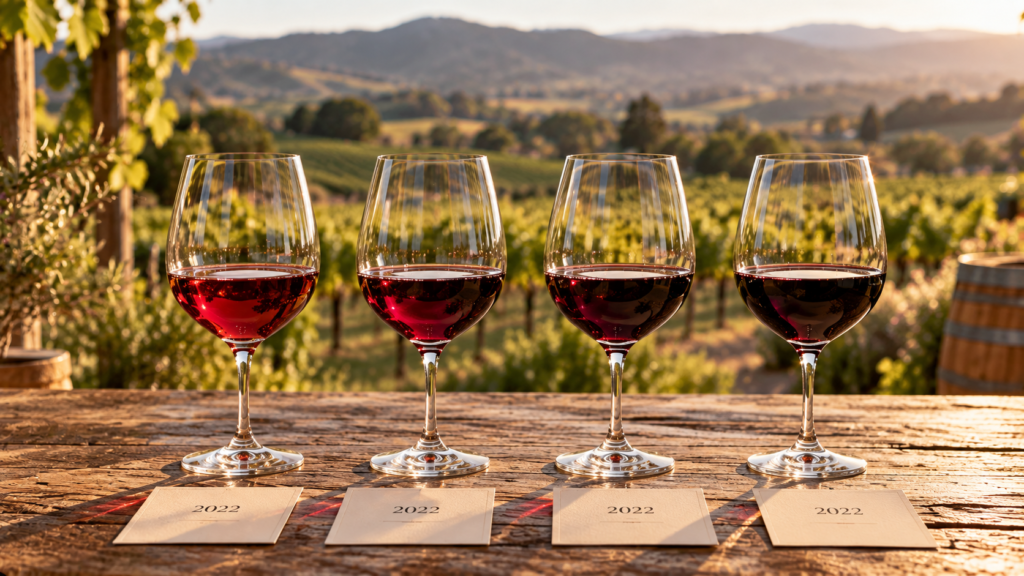
- Two vintages of the same wine
By reducing the number of variables, it becomes much easier to recognize what makes each wine unique.
Taste Slowly
It’s tempting to decide whether you like a wine after the first sip, but wines often evolve as they spend time in the glass.
The aromas may become more expressive, and flavors can change as the wine interacts with oxygen.
Try revisiting your glass after 10 or 15 minutes. You may be surprised by how different it tastes.
Pair Wine with Food
Wine and food have a remarkable ability to enhance one another.
Experiment with simple combinations such as:
- Sauvignon Blanc with goat cheese
- Chardonnay with roasted chicken
- Pinot Noir with salmon
- Cabernet Sauvignon with grilled steak
- Zinfandel with barbecue
- Rosé with Mediterranean dishes
Pay attention to how both the wine and the food change when enjoyed together. These experiences will teach you more than memorizing any tasting chart.
Keep Exploring
Don’t get stuck drinking only one grape variety.
If you’ve always chosen Cabernet Sauvignon, try a Grenache or Syrah.
If Chardonnay has been your go-to white, explore Viognier or Albariño.
Every new bottle becomes another learning opportunity.
Common Mistakes Beginners Make
Everyone starts somewhere, and making mistakes is simply part of learning. Fortunately, most beginner mistakes are easy to avoid.
Believing Expensive Means Better
Price doesn’t determine enjoyment.
Many moderately priced wines offer exceptional quality, while some expensive bottles are appreciated more for rarity than everyday drinkability.
Choose wines that suit your taste rather than your budget alone.
Trying to Memorize Everything
Wine is an endless subject.
Even professionals continue learning throughout their careers.
Focus on enjoying the experience rather than remembering every detail.
Feeling Pressured by Other People’s Opinions
You might hear someone describe a wine as extraordinary while you find it unremarkable.
That’s perfectly okay.
Wine appreciation is personal.
Trust your own palate.
Ignoring Serving Temperature
Serving temperature has a significant impact on flavor.
A white wine served too cold may seem muted.
A red wine served too warm can taste overly alcoholic.
Serving wines at appropriate temperatures allows their aromas and flavors to shine.
Rushing Through a Tasting
Great wine isn’t meant to be hurried.
Take your time.
Observe.
Smell.
Sip.
Reflect.
The slower you taste, the more you’ll notice.
Building Confidence One Glass at a Time
Confidence doesn’t come from knowing every grape variety or wine region. It comes from experience.
Every bottle you open teaches you something new.
You begin recognizing the styles you prefer.
You learn which wines pair best with your favorite meals.
You discover how seasons influence your choices, perhaps crisp whites during summer and richer reds in winter.
Most importantly, you stop worrying about whether you’re “doing it right.”
That’s when wine becomes truly enjoyable.
Many seasoned wine lovers will tell you that they still encounter wines that surprise them. Curiosity, not expertise, is what keeps the experience exciting.
Appreciating the Story Behind Every Bottle
Every wine represents years of work.
Before a bottle reaches your table, vineyard teams have cared for the vines through changing seasons. Winemakers have monitored fermentation, made blending decisions, and patiently waited as the wine matured.
When you understand even a small part of that journey, wine becomes more than a drink, it becomes a reflection of agriculture, craftsmanship, and place.
Livermore Valley, one of California’s oldest wine regions, has built a reputation for producing expressive wines that showcase both tradition and innovation. Visiting local wineries gives you the opportunity to experience these stories firsthand while supporting passionate producers dedicated to their craft.
Enjoying the Journey
The beauty of wine is that there is always something new to discover.
One bottle may introduce you to a grape variety you’ve never heard of.
Another may remind you of a memorable vacation, a special celebration, or dinner with friends.
These experiences become part of your own wine story.
Rather than chasing perfection or trying to impress others with technical knowledge, focus on what makes wine meaningful to you.
Ask questions.
Stay curious.
Try something unfamiliar now and then.
Most importantly, remember that wine appreciation isn’t about becoming an expert, it’s about becoming more attentive to the moments that each glass creates.
Whether you’re enjoying a quiet evening at home or spending an afternoon exploring Mitchell Katz Winery in Livermore Valley, every tasting is another opportunity to learn, connect, and create lasting memories.
In the end, the best wine isn’t necessarily the rarest or the most expensive. It’s the one that brings you joy, sparks conversation, and leaves you looking forward to the next glass.
Final Thoughts
Wine appreciation is a lifelong journey, but it doesn’t have to begin with textbooks, certifications, or an intimidating vocabulary. It begins with curiosity and a willingness to slow down, observe, and trust your own senses.
By focusing on what you genuinely enjoy, exploring different styles, visiting wineries, and embracing each tasting as a learning experience, you’ll naturally develop confidence over time. There’s no finish line and no final exam, just countless opportunities to discover new wines, new stories, and new favorites.
The next time you raise a glass, remember that appreciating wine isn’t about finding the “correct” answer. It’s about finding your answer.
FAQs
What is the easiest way to start appreciating wine?
Start by tasting wines you enjoy, paying attention to their aromas, flavors, texture, and finish. Focus on your personal preferences rather than technical terminology.
Do I need to know wine terminology to enjoy wine?
No. Wine appreciation is about enjoying the experience. Professional terms can be helpful, but they aren’t necessary for discovering wines you love.
How can I improve my wine palate?
Taste a variety of wines, compare similar styles, pair wine with different foods, and take notes about what you enjoy. Over time, your palate naturally becomes more refined.
Why do wines taste different to different people?
Factors such as genetics, personal memories, environment, serving temperature, and food pairings all influence how individuals perceive flavors and aromas.
Is visiting a winery worth it for beginners?
Absolutely. Winery visits provide hands-on learning, opportunities to ask questions, and a deeper appreciation for how wines are crafted from vineyard to bottle.
What’s the best wine for beginners?
There’s no single best wine. Beginners should explore a range of styles to discover what suits their taste, whether that’s crisp whites, light reds, or fuller-bodied wines.