If you’ve ever heard someone say a wine needs to “breathe,” you’re not alone. Few wine concepts are repeated more often or misunderstood more completely than wine aeration.
Some wine lovers swear every bottle should be decanted before dinner. Others insist it makes no difference at all. Then there are the dramatic restaurant rituals involving giant crystal decanters, candlelight, and elaborate swirling motions that make the whole process seem intimidating to beginners.
The truth sits somewhere in the middle.
Aeration can absolutely transform a wine’s aroma, texture, and flavor. In some cases, it softens harsh tannins and reveals layers of fruit and spice that were hidden moments earlier. In other cases, too much oxygen can flatten a wine and strip away the delicate characteristics that made it special in the first place.
Understanding when to decant red wine and when not to is one of the most useful wine skills any enthusiast can learn.
Whether you’re opening a bold Cabernet Sauvignon for a dinner party or enjoying a relaxed evening with friends in Livermore Valley wine country, knowing how oxygen interacts with wine can elevate the entire tasting experience.
What Does It Mean to Aerate Wine?
Wine aeration simply means exposing wine to oxygen.
The moment wine leaves the bottle and interacts with air, chemical reactions begin changing its aroma and flavor profile. Some of these changes happen within seconds. Others unfold slowly over hours.
Think of it like opening a window in a closed room. At first, the environment may feel tight or stale. Fresh air changes the atmosphere, making everything feel more open and expressive.
That’s essentially what happens with many red wines.
Young wines, especially those high in tannins, can initially seem:
- Tight
- Bitter
- Sharp
- Overly alcoholic
- Muted in aroma
Aeration softens these rough edges and allows more nuanced characteristics to emerge.
You may suddenly notice:
- Blackberry or cherry fruit
- Vanilla from oak aging
- Earthy undertones
- Baking spice notes
- Floral aromas
- A smoother mouthfeel
This transformation is why wine professionals often decant certain bottles before serving.
Why Red Wine Changes After Exposure to Air
To understand wine aeration, it helps to think about wine as a living product.
Inside every bottle are thousands of volatile aromatic compounds. These compounds create the smells and flavors we associate with wine, everything from black currant and cedar to cocoa and tobacco.
When oxygen enters the equation, several things happen simultaneously.
Tannins Begin to Soften
Tannins are natural compounds found in grape skins, seeds, and oak barrels. They create the drying sensation you feel on your tongue after sipping a bold red wine.
Young Cabernet Sauvignon, Petite Sirah, or Syrah wines can contain substantial tannin structure.
Aeration helps polymerize tannins, meaning they bind together and become less aggressive. The wine often feels smoother, rounder, and more balanced after exposure to air.
Aromas Become More Expressive
Many wines are initially “closed,” especially younger bottles.
Aeration releases aromatic compounds that may have been trapped or muted inside the bottle. Suddenly, subtle fruit and spice notes become easier to detect.
This is why the first sip from a freshly opened bottle may taste completely different from the glass you enjoy 30 minutes later.
Sulfur Compounds Dissipate
Some wines contain reductive aromas when first opened. These can smell slightly smoky, rubbery, or earthy.
A little oxygen often clears these aromas quickly, allowing cleaner fruit characteristics to emerge.
What Is Decanting?
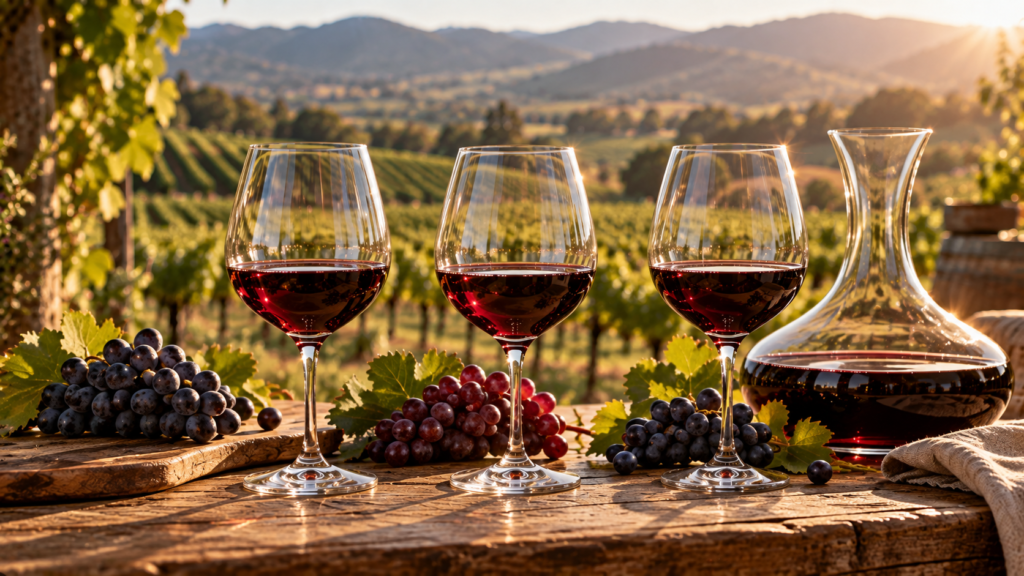
Decanting is the act of pouring wine from its bottle into another vessel usually a wide-bottomed glass container called a decanter.
Historically, decanting served two practical purposes:
- Separating older wines from sediment
- Aerating younger wines
Today, most people decant primarily for aeration.
The shape of the decanter increases the wine’s surface area, exposing more liquid to oxygen than simply pouring wine into a glass.
The wider the base, the more rapidly aeration occurs.
Some wine enthusiasts compare decanting to stretching before exercise. The wine becomes more relaxed, expressive, and approachable.
Aeration vs. Decanting: What’s the Difference?
These terms are often used interchangeably, but they are not exactly the same thing.
Aeration
Aeration refers broadly to exposing wine to oxygen.
This can happen through:
- Swirling wine in a glass
- Using an aerator attachment
- Pouring wine aggressively
- Letting wine sit after opening
- Decanting
Decanting
Decanting is one specific method of aeration involving transferring wine to another container.
In other words:
- All decanting aerates wine
- Not all aeration involves decanting
For casual wine drinkers, simply pouring wine into a large glass and swirling it may provide enough oxygen exposure for many wines.
Which Red Wines Benefit Most from Decanting?
Not every wine improves with extended air exposure. Generally, the wines that benefit most share one or more of these traits:
- High tannin levels
- Youthfulness
- Full-bodied structure
- Significant oak aging
- Concentrated fruit intensity
Cabernet Sauvignon
Cabernet Sauvignon is one of the classic wines for decanting.
Young California Cabernet often contains bold tannins and dense structure. Aeration helps soften these elements while revealing dark fruit, cedar, cocoa, and spice notes.
A structured Livermore Valley Cabernet can evolve dramatically within 30 to 90 minutes of decanting.
Petite Sirah
Petite Sirah is known for:
- Deep color
- Powerful tannins
- Dense fruit concentration
Without air, these wines can feel overwhelming. Decanting often creates greater balance and drinkability.
Syrah
Syrah frequently benefits from moderate aeration, especially when young.
Black pepper, smoked meat, blackberry, and violet notes tend to emerge more clearly after exposure to oxygen.
Merlot
Not all Merlots require decanting, but structured, oak-aged Merlots often become silkier and more aromatic after 20 to 45 minutes of air exposure.
Bordeaux-Style Blends
Complex blends containing Cabernet Sauvignon, Merlot, Cabernet Franc, or Petit Verdot often reveal new layers gradually after decanting.
These wines are built for evolution.
Wines You Should Avoid Decanting
More oxygen is not always better.
Some wines are delicate and can lose their charm quickly after prolonged air exposure.
Older Red Wines
Very old wines can fade rapidly once exposed to oxygen.
While older wines may still require careful decanting to remove sediment, they often need only minimal aeration before serving.
Too much oxygen can flatten aromas and diminish complexity.
Light-Bodied Reds
Delicate wines like Pinot Noir or Gamay may lose freshness if over-decanted.
These wines typically shine through subtlety rather than power.
A brief swirl in the glass is often enough.
Most White Wines
While there are exceptions, most white wines do not require extensive decanting.
Highly structured white wines aged in oak may benefit slightly, but crisp aromatic whites usually taste best fresh and vibrant.
Sparkling Wines
Never decant sparkling wine unless you intentionally want to remove carbonation.
The bubbles are part of the experience.
How Long Should You Decant Wine?
One of the most common wine questions is simple:
“How long should I decant this bottle?”
The answer depends on the wine’s:
- Age
- Structure
- Tannin level
- Style
- Personal preference
Here’s a practical beginner guideline.
Young, Bold Reds
Recommended: 45–90 minutes
Examples:
- Cabernet Sauvignon
- Petite Sirah
- Syrah
- Bordeaux blends
Medium-Bodied Reds
Recommended: 20–45 minutes
Examples:
- Merlot
- Zinfandel
- Sangiovese
Older Wines
Recommended: 10–20 minutes maximum
The goal is usually sediment separation rather than prolonged aeration.
Delicate Wines
Recommended: Minimal or none
Sometimes the best approach is simply serving immediately.
A useful tip: taste the wine immediately after opening, then again every 15–20 minutes. You’ll begin noticing how oxygen changes the wine in real time.
Signs Your Wine Needs Air
Not sure whether to decant a wine?
Here are several clues.
The Aromas Feel Muted
If the wine smells quiet or restrained despite being high quality, aeration may help unlock complexity.
The Tannins Feel Aggressive
If your mouth feels intensely dry after sipping, oxygen may soften the texture.
The Alcohol Feels Hot
Some young wines initially emphasize alcohol more than fruit. Air often restores balance.
The Finish Feels Tight
A closed finish can indicate the wine simply needs time to open up.
Common Wine Decanting Mistakes
Even experienced wine drinkers occasionally overdo aeration.
Here are the most common mistakes beginners make.
Decanting Every Wine Automatically
Some wines peak immediately after opening.
Letting Wine Sit Too Long
A wine can absolutely lose energy after excessive aeration.
Fruit fades first. Then structure weakens.
Eventually the wine tastes dull or tired.
Serving Wine Too Warm
Aeration cannot fix incorrect serving temperature.
Overly warm red wines often taste more alcoholic and less balanced.
Using Tiny Glasses
Even without a decanter, large-bowled wine glasses improve oxygen exposure significantly.
Glassware matters more than many people realize.
Final Thoughts: Trust Your Palate
Wine aeration is both science and personal preference.
Yes, oxygen changes wine chemically. But deciding whether those changes improve the experience ultimately comes down to taste.
Some people love the bold intensity of a freshly opened Cabernet Sauvignon. Others prefer the softer texture and expanded aromatics that emerge after an hour in a decanter.
Neither approach is wrong.
The best way to learn is through experimentation.
Open two glasses from the same bottle:
- Drink one immediately
- Let the second sit for 30–60 minutes
Compare them side by side.
You’ll quickly begin understanding how oxygen shapes aroma, flavor, structure, and texture.
That moment of discovery is one of wine’s greatest pleasures.
The more you pay attention, the more every bottle becomes an evolving experience rather than a static beverage.
And once you notice how dramatically wine can change with air, you may never look at a decanter the same way again.
FAQs
Does all red wine need to be decanted?
No. Bold, tannic young reds benefit most from decanting, while delicate or older wines may require little to no aeration.
How long should you let red wine breathe?
Most young red wines improve after 30–90 minutes of aeration, depending on structure and tannin levels.
Can you decant wine too long?
Yes. Excessive oxygen exposure can flatten fruit flavors and reduce complexity.
Is swirling wine the same as decanting?
Swirling provides mild aeration, while decanting exposes more wine surface area to oxygen for a stronger effect.
What wines should not be decanted?
Older wines, sparkling wines, and delicate reds like Pinot Noir are often best with minimal aeration.