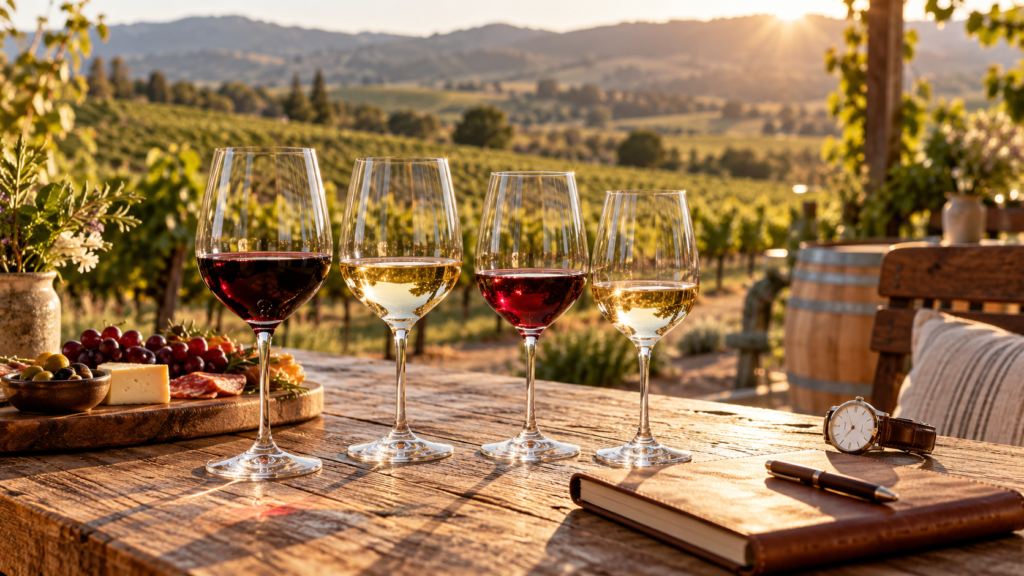
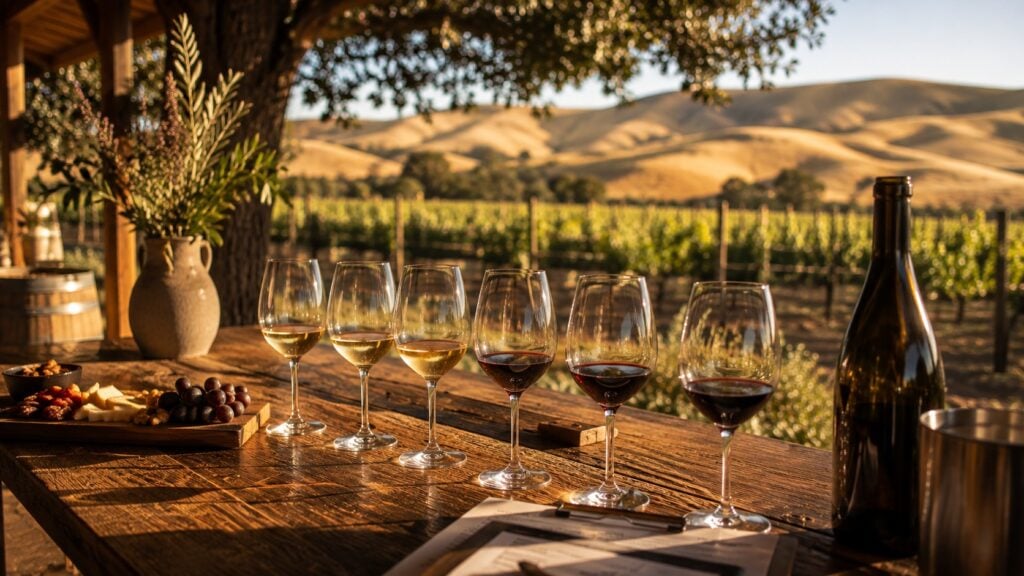
Wine tasting is more than a pleasant ritual; it’s a structured exploration of chemistry, agriculture, and craftsmanship. Every swirl, sniff, and sip reveals choices made in the vineyard and the cellar such as grape variety, site, harvest date, fermentation method, and aging regimen. At Mitchell Katz Winery in Livermore Valley, those choices aim to showcase purity of fruit and a clear sense of place. Learning to taste like a pro magnifies what’s already in the glass so you can connect flavors to their source.
Think of it like tuning a radio from static to stereo. The station, our wine, is already broadcasting. Tasting technique simply clears the signal. With practice you’ll start to identify distinct layers: bright primary fruit, intriguing secondary notes from fermentation, and tertiary complexity from time. Each step in this guide is designed to turn casual enjoyment into confident appreciation.
The Mindset of a Pro Wine Taster
Professionals approach a glass with curiosity and discipline. They avoid rushing to “like” or “don’t like” and instead ask: What is the wine showing me right now? Pro tasters separate observation from interpretation. First, they gather sensory data such as appearance, aroma, flavor, texture, structure. Then they synthesize those details into judgments about balance, typicity, and quality.
- Be neutral. Taste in a space free of strong smells, excessive noise, and visual distractions. Avoid perfume and flavored lip balms.
- Be systematic. Use the same order of evaluation each time—look, swirl, sniff, sip, savor. Consistency builds skill.
- Be descriptive. Replace broad terms like “nice” with granular descriptors such as red cherry, blackcurrant, vanilla, cedar, or cocoa.
- Be open. Great wines evolve in the glass. Before concluding, revisit the wine after a few minutes of air.
Adopting this mindset helps you appreciate the distinct character of Mitchell Katz wines—ripe Livermore fruit balanced by freshness and a textured, food-friendly finish.
Step One – The Pour: Setting the Stage for Flavor
Pour about two ounces into a clear, tulip-shaped glass. The goal is to create headspace for aromas. Holding the stem keeps your hand from warming the wine and prevents fingerprints from obscuring clarity.
Visual cues to note:
- Color and intensity. Pale lemon vs. deep golden in whites; ruby vs. garnet vs. inky purple in reds. Age often shifts hues toward gold or brick.
- Clarity. Bright and limpid suggests sound winemaking; haze can indicate unfiltered style or, rarely, faults.
- Viscosity (“legs”). Tears on the glass correlate with alcohol and glycerol, not quality, but can hint at body.
Mitchell Katz example: A Livermore Valley Chardonnay often shows a bright straw core with glints of gold, signaling ripe fruit and potential oak influence.
Step Two – The Swirl: Unlocking Aromas Through Motion
Swirling oxygenates the wine and volatilizes aromatic compounds. If you’re new to it, start with the base of the glass on the table and move in small circles; as you gain confidence, swirl gently in the air.
What to expect after swirling: Primary fruit becomes more expressive, subtle florals emerge, oak-derived notes (vanilla, toast, baking spice) clarify, and any reductive tones blow off. In fuller reds like Mitchell Katz Petite Sirah, a swirl can transform compact dark fruit into layered blackberry, blueberry, and cocoa.
Step Three – The Sniff: Training Your Nose for Complexity
Your nose is the star of the show. Take a few short sniffs, then one long inhale. Pause and identify categories before specifics: fruit, floral, herbal, spice, earth, oak.
- Primary aromas: grape-derived (cherry, plum, citrus, peach, tropical fruit, herbs).
- Secondary aromas: fermentation/aging vessels (yeast, brioche, butter, cream from malolactic fermentation; vanilla/toast from oak).
- Tertiary aromas: bottle age (leather, tobacco, dried fruit, forest floor).
Practice tip: Build a “scent library” at home: cut citrus, crush herbs, toast spices, smell fresh soil after rain. Associating real-world smells sharpens recall when you return to the glass.
Step Four – The Sip: Discovering Layers of Taste
Take a modest sip and let it coat your tongue. Draw a whisper of air across the wine to push aromas retro-nasally toward your olfactory receptors. Track the wine’s journey:
- Attack (first impression): initial burst of fruit, sweetness, or acidity.
- Mid-palate: shape and texture—silky vs. grippy, creamy vs. crisp.
- Finish: length and resonance—do flavors fade quickly or echo for 10+ seconds?
Mitchell Katz example: Chardonnay may open with green apple and Meyer lemon, broaden to vanilla and almond mid-palate, and finish with a citrus-mineral snap that invites another sip.
Step Five – The Savor: Lingering Flavors and Aftertastes
The finish is where quality often reveals itself. A long, balanced finish suggests ripe fruit, integrated oak, and harmonious structure. Count the seconds after swallowing; anything beyond 8–10 seconds indicates notable persistence.
Many Mitchell Katz reds, especially Petite Sirah, deliver a generous finish of dark fruit, cocoa powder, and a gentle spice halo that pairs beautifully with grilled meats and aged cheeses.
Tools and Glassware That Enhance Tasting
Glass shape guides aroma delivery and palate distribution. While universal stems work well, varietal-optimized shapes can spotlight nuance.
- Bordeaux bowl (reds): Focuses powerful aromas in Cabernet Sauvignon and Merlot, smoothing tannin perception.
- Burgundy bowl (aromatic reds): Wider surface area elevates delicate florals and red fruit in Pinot Noir.
- Chardonnay stem (oaked whites): Slightly wider rim supports creamier textures and oak-derived spice.
- Universal tasting glass: Reliable choice for mixed flights and home tastings.
Auxiliary tools: a simple waiter’s corkscrew, a clean white background for color assessment, a spittoon, neutral crackers, water, and a notebook.
Understanding the Wine Aroma Wheel
The aroma wheel groups scents from broad to specific so your brain can locate and name what it’s perceiving. Start with the outer ring (fruit/floral/spice/earth), then dial inward to detail (e.g., “berry → blackberry → blackberry compote”).
How to use it in a tasting:
- Swirl and sniff; name the broad family (fruit vs. earth vs. spice).
- Map one or two specific notes per family—no need to list everything.
- Correlate to structure: does high acidity amplify citrus? Do firm tannins support dark fruit?
Mitchell Katz example: Petite Sirah often sits in “black fruit → blackberry/blueberry” with “spice → pepper/anise” and “oak → vanilla/cocoa.”
Common Tasting Descriptors (and How to Find Them in Mitchell Katz Wines)
Cabernet Sauvignon
Likely notes: blackcurrant, blackberry, cedar, cocoa, graphite.
Structure: medium+ to full body, firm tannins, moderate acidity.
Serving tip: 60–65°F and consider a brief decant.
Merlot
Likely notes: ripe plum, red cherry, mocha, baking spice.
Structure: medium body, softer tannins, balancing acidity.
Pairing idea: herbed roast chicken or mushroom risotto.
Petite Sirah
Likely notes: blackberry, blueberry, cracked pepper, dark chocolate.
Structure: full body, assertive tannins, long finish.
Tip: Best after a 30–60 minute aeration.
Chardonnay
Likely notes: green apple, pear, vanilla, almond, brioche (if oak aged).
Structure: medium body, creamy texture, bright acidity.
Serving tip: ~50°F preserves freshness while opening aromatics.
Sauvignon Blanc
Likely notes: lemon, lime zest, passionfruit, fresh-cut grass, wet stone.
Structure: light to medium body, high-refreshment factor.
Pairing idea: goat cheese, oysters, citrus-dressed salads.
Pairing Your Tasting with the Livermore Valley Experience
Livermore Valley’s warm days and cooling evening breezes yield ripe fruit framed by lively acidity. Tasting onsite adds dimension: the sunlight on the vineyard, the gravelly soils underfoot, the scent of bay laurel and eucalyptus on the wind—context that subtly primes your senses.
- Microclimate lift: Diurnal shifts retain acidity, clarifying citrus in whites and red-fruit vibrancy in reds.
- Soil signature: Alluvial soils contribute a clean mineral line—perceived as a mouth-watering finish.
- Regional pairings: Local cheeses, artisan breads, and seasonal produce echo and accent our wines’ natural rhythms.
Practice Makes Perfect: Building Your Wine Vocabulary
A structured journal accelerates learning. Capture the essentials for each wine you taste and your precision will skyrocket.
- Basics: producer, vineyard (if single-vineyard), variety, vintage, ABV, closure.
- Appearance: color, intensity, clarity.
- Aromas: list 3–5 notes max—quality over quantity.
- Palate: sweetness, acidity, tannin, body, alcohol, flavor intensity.
- Finish: short, medium, long; descriptors that persist.
- Conclusions: quality level, drink window, ideal pairings.
Tip: Revisit a wine over 30–60 minutes. Add notes as it opens; you’ll witness evolution in real time.
Tasting Etiquette: Do’s and Don’ts at the Winery
Do
- Ask questions—our team loves sharing details about vineyard blocks, barrels, and blends.
- Hydrate and use palate cleansers to reset between pours.
- Spit if you’re tasting many wines; pros do it to evaluate clearly.
Don’t
- Wear strong fragrances; they mask delicate aromatics.
- Rush. Give each wine a few minutes of attention.
- Feel obligated to finish every pour—focus on learning.
From Novice to Connoisseur: Your Wine Tasting Journey
Expertise is cumulative. Five minutes of mindful tasting repeated across many glasses compounds into intuition: you’ll quickly sense when acidity is high, when tannins are powdery versus coarse, when oak is fresh versus seasoned. Your notes will shrink from paragraphs to crisp, accurate sentences—and your enjoyment will expand with every bottle.
Pairing Your Tasting with the Livermore Valley Experience
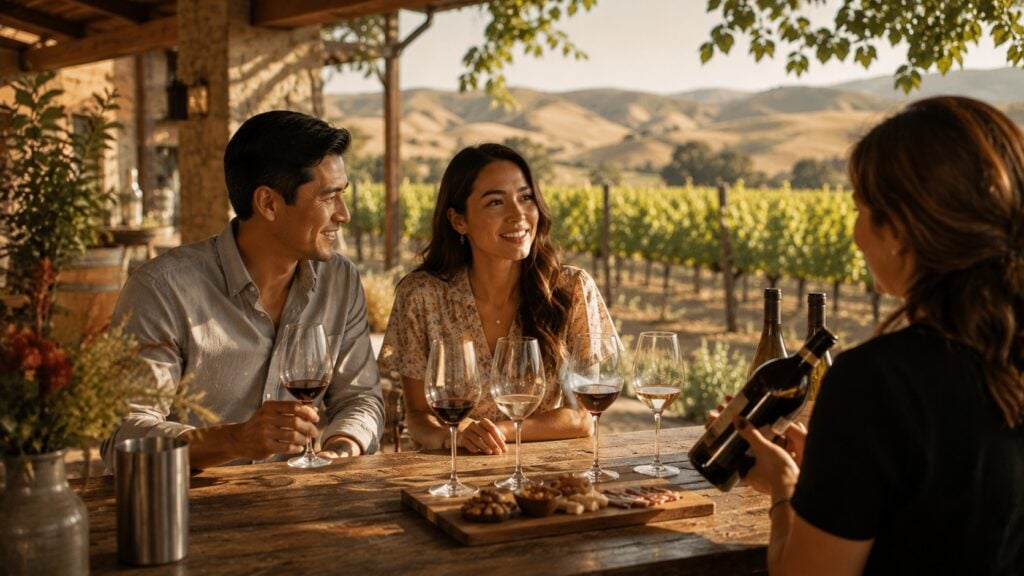
The Livermore Valley offers a unique microclimate of warm days and cool nights, influencing grape ripeness and acidity. Enjoying a tasting on-site at Mitchell Katz Winery means you’re experiencing flavors in the very landscape that shaped them.
Join the Mitchell Katz Wine Club now!
Practice Makes Perfect: Building Your Wine Vocabulary
Like learning a new language, wine tasting vocabulary grows with practice. Keep a tasting journal noting the wine name, vintage, appearance, aromas, flavors, and finish length.
Tasting Etiquette: Do’s and Don’ts at the Winery
- Do ask questions and take your time.
- Don’t wear heavy perfume or cologne.
- Do rinse between tastings.
From Novice to Connoisseur: Your Wine Tasting Journey
Every expert was once a beginner. The joy of wine tasting lies in the continuous discovery—no two vintages, bottles, or sips are the same.
The Physiology of Taste: How Your Senses Work Together
Wine tasting engages multiple senses such as taste, smell, sight, and touch. Your tongue detects basic flavors while your nose identifies aroma compounds, creating a full flavor profile.
The Psychology of Wine Perception: Why Mood and Memory Influence Flavor
Your mood, environment, and memories all shape how wine tastes. A wine enjoyed in the Livermore sunshine may seem different from the same bottle at home on a rainy night.
Tannin, Acidity, and Body: Breaking Down Wine Structure
Tannins add texture, acidity brings freshness, and body determines weight. Understanding these elements helps evaluate balance and aging potential.
The Role of Temperature in Tasting: Serving for Optimal Flavor
Serving wine at the correct temperature enhances flavor. Whites shine between 45–55°F, while reds are best between 55–65°F.
Decanting and Aeration: Science and Benefits
Decanting introduces oxygen to soften tannins and release aromas. Older wines benefit from sediment separation, while young wines gain complexity from aeration.
Conclusion: Elevating Every Glass with Knowledge and Curiosity
Mastering swirl, sniff, and sip reframes wine from a beverage into a conversation—between variety and place, season and cellar, maker and taster. With a little structure and a lot of curiosity, every Mitchell Katz wine becomes a richer experience.
FAQs
How do you properly swirl wine?
Gently rotate the glass in small circles to release aromas, keeping it steady on a surface if needed.
Why is smelling wine so important?
Up to 80% of flavor perception comes from aroma, making sniffing essential to understanding wine’s complexity.
What’s the best way to describe wine flavors?
Use a wine aroma wheel to match scents and tastes with common descriptors like fruity, floral, or earthy.
Can beginners learn wine tasting quickly?
Yes — by practicing the five key steps (look, swirl, sniff, sip, savor) and keeping a tasting journal.
Does glass shape really affect wine taste?
Yes — the shape directs wine to different parts of your palate and concentrates aromas for a better tasting experience.